Chanel — Paris – Venise
Essence
Paris-Venise (2018) is the standout of Chanel’s three-strong Les Eaux de Chanel travel collection, an Olivier Polge composition inspired by Coco Chanel’s Orient-Express journey to Venice. It’s a light, transparent “fresh oriental” - a soft citrus-neroli opening over a powdery iris-floral heart and a gentle vanilla-tonka-benzoin amber base. Effectively a sheer, modern, daytime reinterpretation of Chanel’s classic Coco/Coromandel oriental DNA, pitched at “quiet luxury” wearers. Pretty and easy; criticized mainly for being too light and too safe.
Scent Profile
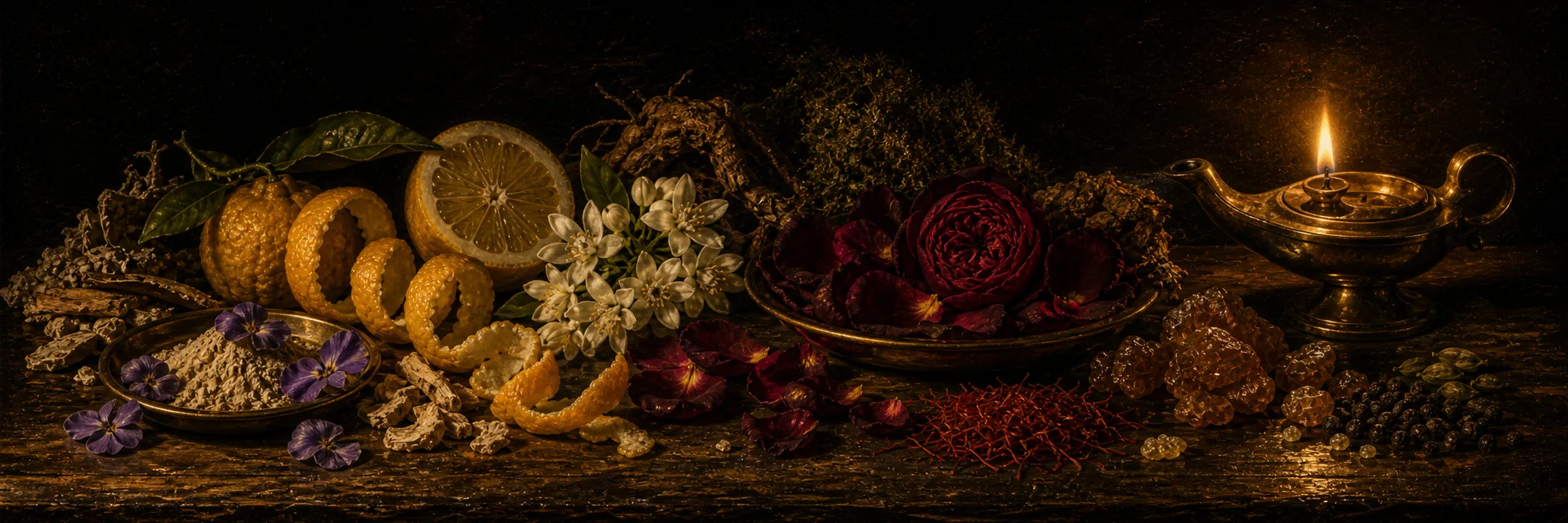
The opening is bright and playful: a citrus-and-neroli accord (lemon, bergamot, orange, petitgrain) lifted by pink pepper and red-berry sparkle - “the laugh of starting off a trip,” as Colognoisseur’s Mark Behnke put it. It reads as a refined, subdued citrus rather than a sharp cologne blast; Now Smell This’s Angela called it less “golf-club shower stall” than a typical cologne, more like “barely sweetened, vanilla-fruit-infused iced tea.” The heart (1-3 hours) brings iris forward, modulated by Grasse geranium and a soft floral bouquet of rose, ylang, and a touch of jasmine, with a bit of powder sneaking in. Reviewers note the iris here is deliberately “scrubbed of its richer, spicier, fuller buttery facets” - crisp and transparent rather than the deep, rooty orris of, say, 28 La Pausa. This is the collection’s most floral-powdery member; some wearers get a clean, creamy, soapy quality, others a berry-neroli sweetness twirling with the florals. White flowers stay soft and supporting. The drydown (3+ hours) is where Paris-Venise shows the collection’s “most substantial” base (Persolaise): a gentle ambery warmth of benzoin, tonka, and vanilla - Polge’s “version of an Oriental base done with insouciance” (Colognoisseur). It’s the only one of the three Eaux that gestures convincingly at Chanel’s Coco/Coromandel oriental lineage, but in sheer, transparent form. Of the listed notes, citrus/neroli, iris, and the vanilla-tonka-benzoin base are most perceptible; rose and jasmine submerge into a soft floral wash. Linear-leaning with a clear soft-amber finish. Signature accord: neroli-citrus over powdery iris and a sheer vanilla-tonka amber.
Performance
Light by design and by concentration (EDT). Projection is modest unless heavily applied; sillage is close. Longevity is the chief complaint: Now Smell This reports it “mostly vanished from my skin” after a few hours, and wearers report anywhere from 20-30 minutes to 4-5 hours on skin - short for the price. It lasts considerably longer on fabric (one reviewer: “lingers on fabric for almost the entire day”). Performs best in heat - it was conceived and praised as a hot-weather summer fragrance - and can feel too faint in cold. Best strategy: spray generously, reapply through the day, and/or apply to clothing; layering a dab of Chanel Coco over it is a wearer/critic trick to deepen the base (Now Smell This).
Wearing Context
A spring/summer and warm-weather daytime fragrance above all - light, fresh, and refreshing in heat. It suits casual-to-polished daytime wear, work, travel, and anyone wanting an understated “quiet luxury” Chanel that won’t dominate. It’s genuinely unisex but leans feminine; one reviewer found it “too bright… almost too feminine” for his comfort, while others wear it as a soft unisex daily. It shines as an easy, elegant, inoffensive warm-weather scent and a gentle introduction to Chanel’s oriental side. It falls flat for those wanting projection, longevity, complexity, or a true rich oriental - Persolaise found it doesn’t pull off “fresh and breezy” as well as its siblings because it leans on weightier materials, and several reviewers simply find it “too light and boring.” Social-perception skew: reads as expensive, tasteful, and “rich lady after her bath” refined.
Comparisons & DNA
The dominant lineage cited by critics: Chanel Coco and Coco Noir - Persolaise notes Paris-Venise “instantly calls to mind Coco… and, by extension, Coco Noir, which was specifically designed to evoke the land of the Doges,” but in a lighter, less convincing-as-cologne form. Now Smell This and wearer reports also reference Chanel Coromandel (as the richer “Bordeaux wine” to Paris-Venise’s “tea”), Chanel No. 5 / No. 5 L’Eau and Eau Premiere (the bottle is a throwback to old No. 5 cologne flacons; users smell “a lighter, fresher mix of No. 5 and Eau Premiere”), and iris-powder Exclusifs No. 18 and Misia. Persolaise’s commenter likened it to “a Chanel Chance flanker.” Within the trio, it’s the warmest/most oriental; Paris-Deauville is the bright chypre-ish citrus-moss member and Paris-Biarritz the lightest, soapiest cologne. A wearer offered a cheaper iris-powder alternative - Nobile 1942 Epine (“same iris floral powder scent, but much cheaper and lasts”). As a Chanel EDT, no true designer clone exists; the closest in-house deeper alternative is simply Coco/Coromandel.
Reception
Within the niche-blog and wearers world, Paris-Venise is the consensus favorite of the three Eaux, but reception is moderate rather than rapturous. Now Smell This’s Angela picked it as her favorite of the trio - “the idea of an oriental cologne was intriguing” - praising its easy, iced-tea charm. Colognoisseur’s Mark Behnke admired Polge’s restraint in not going “full-on Oriental,” though he found all three “a little too light for my taste.” Persolaise rated it the “curious” entry with the collection’s “most substantial drydown” but said it doesn’t pull off the breezy cologne vibe as well as its siblings. Common praise: elegance, freshness, the soft vanilla-amber base, hot-weather wearability, “quiet luxury.” Common criticisms: weak longevity/projection, and that it’s pretty but unremarkable and “tries a little too hard to please everyone.” Axes of polarization: light-and-elegant vs. boring-and-overpriced; too feminine for some men. Blind buy verdict: reasonably safe for Chanel fans who want a light summer scent and accept EDT performance - but sample for longevity, as it’s a known weak point.
Versions & Reformulation
Originally launched May 2018 as part of Les Eaux de Chanel, Eau de Toilette only, in 125 ml (~$130 at launch) and 1.7 oz / 50 ml sizes, plus body lotion and hair/body shower gel. The collection has since expanded (Paris-Riviera, Paris-Edimbourg, Paris-Paris, etc.). Wearers have repeatedly wished for an EDP-strength version given the light EDT performance; no eau de parfum concentration of Paris-Venise is documented. No major reformulation is widely reported, though Chanel’s INCI lists update periodically for regulatory reasons.
Acquisition Notes
Luxury-designer pricing within Chanel’s premium-but-not-Exclusifs travel tier. Commonly available in 125 ml and 1.7 oz/50 ml EDT, plus body lotion and shower gel; frequently sold as part of Les Eaux discovery/travel sample sets. Decant ecosystem exists (sample sets and decanters carry it). The bottle is a deliberate homage to vintage No.
Notable Facts & Lore
- Olivier Polge’s stated intent, per Chanel: “With Paris-Venise, I wanted a fresh fragrance, but with a round and soft expression.”
- The fragrance’s backstory is genuine Chanel history: in 1920, mourning the death of her great love Boy Capel (killed in a 1919 car accident), Gabrielle Chanel was taken to Venice by her friend Misia Sert; the city’s Byzantine mosaics and Baroque art at St.
- Mark’s Basilica became a lasting influence on her jewelry and aesthetic.
- Paris-Venise evokes the Orient-Express journey between the two cities and “the gateway to the Orient.”
- Critics enjoyed the conceit that the whole Les Eaux trio is, as Persolaise framed it, “a journey through some of the brand’s most memorable olfactory endeavours” - Polge re-offering Chanel’s heritage (Coco, No.
-
- to a younger audience, much as he was tasked to do with No.
- 5 L’Eau.