Chanel — Bleu de Chanel
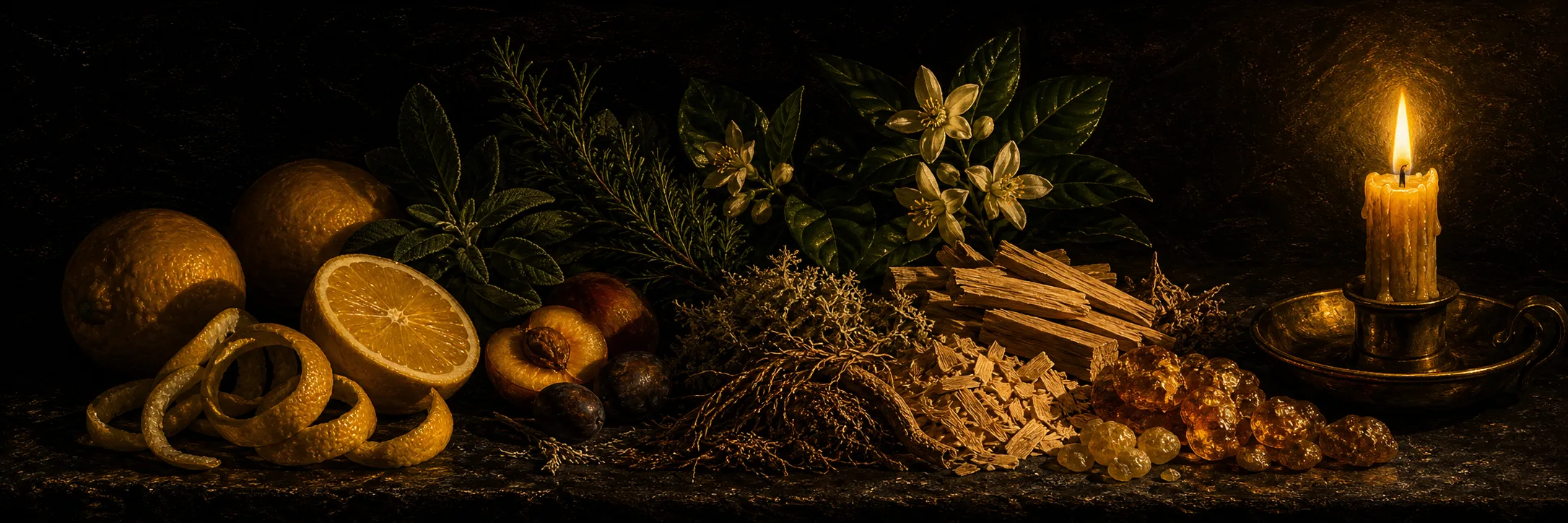
Essence
Bleu de Chanel EDT (2010) is the fragrance that defined what “blue” means in 21st-century masculine perfumery and remains the single most influential designer men’s fragrance of the past fifteen years. Jacques Polge’s brief, in his own words, was to capture “the crispness of a pine forest at the height of summer.” What he delivered was a citrus-aromatic-woody composition built on grapefruit, ginger, incense and a heavily Iso E Super-driven woody base - clean, instantly recognizable, infinitely commercial. It is the standard-bearer of the “blue freshie” category and the template every clone house has tried to copy.
Scent Profile
The opening is loud, bright, and unmistakably citrus-spicy. Grapefruit dominates the first ten minutes - pithy, slightly bitter, refreshingly cold - with lemon adding a sharper edge and mint contributing a cool exhale rather than a toothpaste obviousness. Pink pepper is the spice signature: it sparkles rather than burns, supplying the slight effervescent prickle that distinguishes Bleu from other citrus openings. This is among the most distinctive opening minutes in mainstream masculine perfumery; for a stretch in the early 2010s, it became the smell of department-store testers everywhere. Around the forty-five-minute mark, ginger emerges and takes over from the citrus. The ginger is exquisitely blended - spicy but not raw, more candied root than fresh ginger juice. It carries a faint nutmeg dustiness alongside. Jasmine, listed in the notes, is present but submerged - it functions as a smoother and brightener rather than as a perceptible floral. By ninety minutes the citrus is gone and the fragrance enters its middle stage: a smooth, well-blended woody-aromatic accord where individual notes become hard to isolate. The heart-to-base transition introduces incense - a clean, gauzy frankincense that adds atmosphere without going churchy. Cedar, vetiver, sandalwood and patchouli weave together around an unmistakable Iso E Super spine. Iso E Super is the single most consequential ingredient in Bleu - it provides the “smooth woody” character that defines the modern blue genre, and Bleu de Chanel uses it generously without the synthetic harshness that characterizes lesser composer’s deployment. There’s labdanum’s faint warmth in the base, white musk for a clean-skin halo. Drydown (three-plus hours) is a clean woody-amber skin scent: Iso E cedar smoothness with hints of incense and a clean musk wash. Signature accord: grapefruit-and-ginger over incense-and-cedar. Evolution is real but not dramatic - Bleu wears with a clear arc from citrus to woody-amber, but the transitions are seamless.
Performance
Projection is moderate - about an arm’s length for the first ninety minutes, fading to half that. Bleu EDT was never a beast in projection; it’s the EDP and Parfum that pick up that slack. Sillage is moderate, complimentable. Longevity on skin is approximately five to seven hours - the shortest of the four Bleu concentrations. On clothing, eight to twelve hours. Hot weather is where the EDT shines - the citrus and ginger stay crisp where the EDP can feel weighty. Cold weather is the EDT’s weakness; the citrus dissipates fast and the woody base lacks the heft to carry. Humidity is fine. Application strategy: three to five sprays, focused on chest, neck and pulse points; over-application is unusually forgiving because the composition is clean rather than dense.
Wearing Context
Year-round but tilts toward warm weather. Spring, summer, and warm autumn days are the EDT’s prime. Daytime more than evening - the EDP and Parfum are more night-coded. Bleu EDT is the textbook office fragrance: complimentable, polite, recognizable as expensive without being intrusive. Also works for casual day-to-day, daytime dates, gym-to-coffee transitions, business casual contexts. Settings where it falls flat: formal evening events (under-powered), club nights (too well-mannered), winter outerwear contexts (citrus disappears under the wool). Cold weather pushes you toward the EDP or Parfum. Social perception skew is overwhelmingly positive - Bleu EDT is the safest blind-buy gift in masculine perfumery, the fragrance most likely to be received as “smells expensive and good” by non-enthusiasts.
Comparisons & DNA
The closest internal comparisons are the other Bleu concentrations - see versions section. Versace Dylan Blue is the canonical designer-level peer and is widely described as Bleu’s blueprint-adjacent younger sibling at half the price. Dior Sauvage EDT is the louder, sweeter, ambroxan-forward competitor that overtook Bleu commercially in the late 2010s. YSL Y EDP is the closer modern peer - cleaner, more aquatic, similar professional-clean signature. Clone market is extensive. Armaf Club de Nuit Blue Iconic (2022) is the most widely-cited Bleu clone - Wearer response is roughly 90% similarity at one-fifth the price, with slightly more aggressive citrus and noticeably better longevity than the original EDT. Common complaint is a synthetic edge in the first ten minutes that fades. French Avenue Zenith Deep and Maison Alhambra Infini Homme are other notable clones. None match the polish of the original but several are remarkably close in air. Lineage: Bleu de Chanel is the modern descendant of citrus-aromatic-woody compositions running back through Eau Sauvage (1966) and Cool Water (1988), but it specifically owes its woody-clean character to Iso E Super, an aroma chemical that Geza Schoen’s Escentric Molecules Molecule 01 highlighted in 2006 and that Bleu deployed at scale. Bleu inspired the entire 2010s “blue genre” - every grapefruit-pink-pepper-cedar fragrance that followed (Y EDP, Dylan Blue, dozens of clones) traces back to Polge’s 2010 composition.
Reception
Wearer response is paradoxical: simultaneously the most commercially successful masculine fragrance of the past fifteen years and the most critically dismissed among fragrance enthusiasts. Praise: versatility, polish, recognizability, the safest blind buy in masculine. Criticism: lack of originality, too-prominent Iso E synthetic feel for the price, “you’ll smell like everyone else.” Luca Turin and Tania Sanchez treated Bleu coolly in Perfumes: The Guide 2018. Bois de Jasmin (Victoria Frolova) wrote a notably damning review: “If I were given Bleu de Chanel in a blank vial, I would have pegged it as a Hugo Boss flanker: a competent, commercial, focus group winner. Indeed, it is almost a shock to realize that this is a major masculine Chanel launch… Bleu de Chanel does not charter new directions; instead, it relies on the market winning combination of citrus, aromatics, marine notes and woods.” That assessment captures the critical consensus. Persolaise has been more measured - he is not a Bleu enthusiast but acknowledges the composition’s craftsmanship and commercial logic. wearer discussions treats Bleu as the entry-level “your first nice cologne” - universally recommended for beginners, treated as basic by advanced collectors. Blind buy verdict: yes for first-time buyers and gift contexts; no if you’re past the entry-level stage of the hobby and want distinctiveness.
Versions & Reformulation
Bleu de Chanel has launched in four concentrations: EDT (2010), EDP (2014), Parfum (2018), and L’Exclusif (2025). The EDT is the original - brightest, most citrus-forward, shortest performance. The EDP is the most versatile and widely considered the best overall. The Parfum is darker, woodier, more night-coded. L’Exclusif is the most recent expansion. The EDT has not been significantly reformulated since launch but is widely felt to have lost some of its original projection in later batches.
Acquisition Notes
Designer tier pricing: $142 for the 3.4 fl. oz. (100ml) EDT, $115 for 1.7 fl. oz.
Notable Facts & Lore
- Polge’s stated intent, quoted in trade press at the 2010 launch, was to capture pine forest air at altitude: “I want to give the impression of cold air on the top of a mountain. The sense of fresh, cold air.”
- The “Bleu” name had been preserved by Chanel in trademark for decades before the launch and reportedly went through multiple aborted compositions before Polge’s was selected.
- The 2010 launch campaign starred French actor Gaspard Ulliel (co-starring Ingrid Sophie Schram), directed by Martin Scorsese, premiered online on August 25, 2010, and was scored to The Rolling Stones’ “She Said Yeah.”
- Scorsese later told Grazia of the 60-second format: “To think, in terms of telling a story in 60 seconds… this is a real workout.”
- V Magazine confirmed the campaign tagline as “Be Unexpected.”