Chanel — Paris – Deauville
Essence
Paris - Deauville is the fresh-green cornerstone of Chanel’s Les Eaux de Chanel line, one of the original 2018 trio (with Paris - Biarritz and Paris - Venise) by Olivier Polge. It is a bright citrus-and-basil cologne that warms into a transparent, oakmoss-free modern chypre via clean patchouli, evoking the windswept grasses of the Normandy resort where Gabrielle Chanel opened her very first boutique in 1913. Unisex, sparkling and aromatic, it is widely regarded as the connoisseur’s favorite of the early Les Eaux, a stripped-down Cristalle for hot weather.
Scent Profile
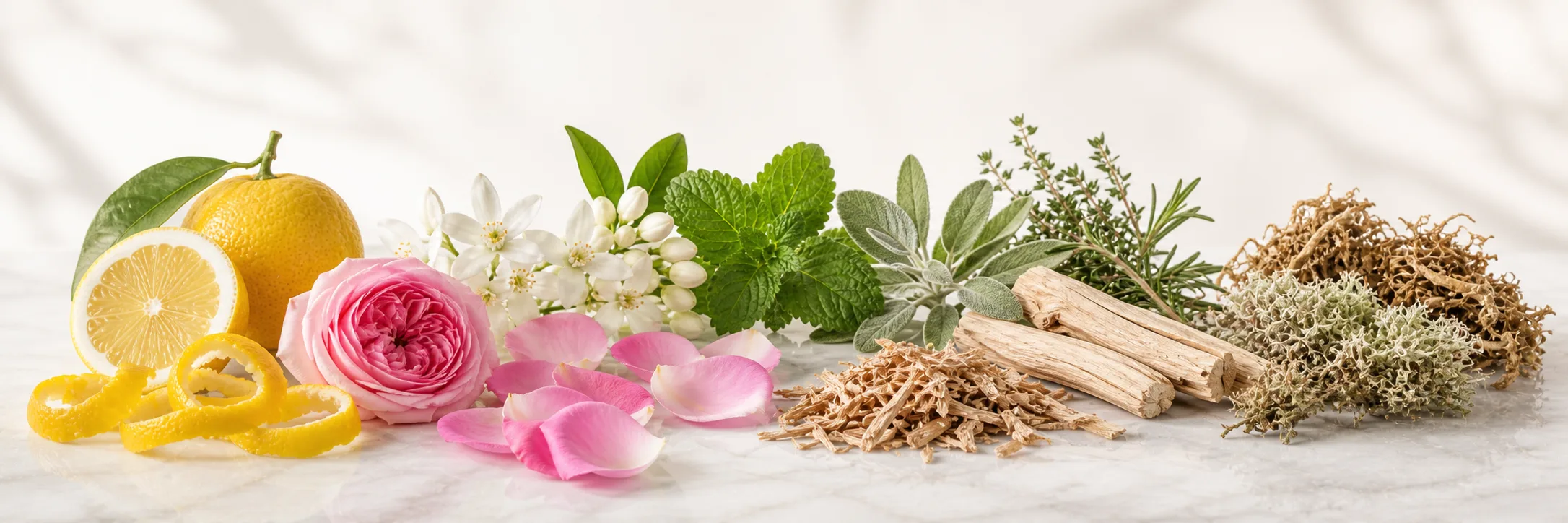
The opening is a bright, juicy citrus melange, with lime and orange most prominent on most skin, lifted by lemon and bergamot. It reads like downing a glass of refreshing juice on a warm day, vibrant and frothy but not aldehyde-fizzy. Almost immediately the aromatic green of basil and the woody-green petitgrain arrive, giving it a savory, slightly bitter herbal edge that distinguishes it from a generic citrus cologne. A faint salt and sea-air impression is noted by some, and it divides opinion.
In the heart the citrus recedes and a green, herbaceous core dominates: basil plus green notes conjuring crushed leaves and grassy meadows. Hedione lends airy radiance, while the jasmine and rose are present but glassy-transparent, so the fragrance stays enjoyable even for someone not fond of rose or jasmine. On some skin the florals barely register against the green. This green-aromatic-citrus blend is the signature accord.
The drydown brings a clean, slightly sweet patchouli, the move that makes Deauville a modern chypre despite having no oakmoss. It is never dirty or earthy, adding a soft woody backbone instead; Bois de Jasmin’s Victoria Frolova noted the drydown has a layer of patchouli that gives it a chypre-like impression. The result is a wispy, celadon-tinted green musk-patchouli skin scent. It evolves from citrus to green-herbal heart to soft chypre, but gracefully and within a narrow, transparent range.
Performance
Light by design, these are deliberately cologne-weight eaux. Projection is light to moderate, strongest in the opening when the citrus-basil can briefly punch, then settling close to the skin, with modest sillage. Longevity reports diverge sharply: Colognoisseur’s Mark Behnke claimed an outlier ten to twelve hours, while most report far less, commonly three to six hours on skin. A reasonable synthesis is roughly four to six hours on skin for most, with the citrus top fleeting and the patchouli base accounting for the tail, and meaningfully longer on clothing and especially in hair. It is a hot-weather specialist that cuts heat beautifully but can feel thin and low-wattage in cold. Spray lavishly; clothing and hair application solve the longevity gripe.
Wearing Context
Best in late spring and summer, daytime, casual to semi-formal: errands, al fresco dining, work, weekend wear. It is an open-air, mood-lifting fragrance that does not wear you, elegant enough for the office and easy enough for the beach thanks to the basil and chypre base. Where it falls flat: cold weather, anyone needing projection or longevity for the price, and those put off by the salty-green or basil facet (a minority find the green weedy or that it goes dryer-sheets on their skin). It reads as genuinely unisex, fresh-classic rather than trendy, an understated, sporty elegance.
Comparisons & DNA
Within Les Eaux, Deauville is the fresh-green chypre one, contrasting with the lighter aquatic-muguet Paris - Biarritz and the rich vanillic-iris Paris - Venise. Within Chanel, the dominant comparison is Cristalle, which it is repeatedly called a stripped-down version of, with a nod to the green-chypre lineage of No. 19. Outside the house, the clearest cousin is Jo Malone Lime Basil & Mandarin, the obvious basil-citrus pairing, though Deauville is more refined and chypre-grounded. O de Lancome sits nearby as a citrus-green relative with less nuanced citrus. Persolaise positioned the whole 2018 trio as Polge travelling through the house’s scented heritage, calling Deauville the most predictable of the three.
Reception
Consensus is strongly favorable on smell, with performance the lone serious gripe. It is frequently named the best of the original Les Eaux trio, praised as elegant, refreshing, unisex and mood-lifting, a summer weekend scent also sophisticated enough for work. Bois de Jasmin’s Victoria Frolova wrote that Deauville took her to Sicily rather than France, evoking the bitterness of orange peel, green leaves and orange granita, and flagged the chypre-like patchouli drydown. Now Smell This’s Angela praised its wonderful moss and chypre feel, while Colognoisseur’s Mark Behnke admired the coherent collection but felt Polge had gone a little too light. A dissenting Kafka-Esque review called it a brisk, classic, intensely fresh cologne with a banal back-end and poor longevity, a useful counterweight. The axes of polarization are longevity, the salty-green-basil facet (love it or weed-whacker), and value for Chanel.
Versions & Reformulation
Single concentration: Eau de Toilette only, offered alongside a body lotion, with a body wash and shower gel also produced. Sizes include the line’s generous 125 ml plus 50 ml. There is no reformulation history of note for this 2018 release. The matching body products are frequently cited as the best way to boost longevity, especially the hair-clinging wash.
Acquisition Notes
Pricing sits at the accessible end of Chanel, well below Les Exclusifs, roughly $150 for 50 ml to $215 for 125 ml at retail depending on market. Les Eaux samples circulate widely, and many wearers buy the five-piece Chanel Les Eaux sample set specifically to try Deauville. Chanel does not provide samples through customer care, so sample sets are the testing route. Buy from Chanel boutiques, chanel.com or authorized department stores, and treat steep marketplace discounts with caution.
Notable Facts & Lore
- Named for Deauville, where Gabrielle Chanel opened her first boutique in 1913 on rue Gontaut-Biron, financed by Arthur “Boy” Capel.
- That boutique is where the mariniere striped shirt, tweed and jersey aesthetic that became iconic Chanel began.
- Olivier Polge said he chased not literal Normandy but the idea urbanites have of it, “the promise of a stroll through the tall grasses.”
- Trade lore holds that Patricia de Nicolai had to rename her perfume “Week-end a Deauville” after the town’s mayor objected.
- Les Eaux were positioned as accessible gateways to the pricier Les Exclusifs.
- Its lasting reputation is as a connoisseur-favorite summer Chanel rather than a viral hit.