Chanel — Égoïste Platinum
Essence
Egoiste Platinum is a 1993 Jacques Polge fresh aromatic fougere commissioned to rescue Chanel’s masculine commercial position after the original Egoiste underperformed in the United States. It is essentially unrelated to its namesake - different family, different mood, different consumer - and is best understood as Chanel’s contribution to the lavender-rosemary-geranium-vetiver template that dominated 1990s aromatic masculines. Famously “metallic,” soapy, “barbershop after a clean haircut,” and quietly elegant, Platinum is the fougere for people who otherwise dislike fougeres: cold-shimmer green herbs over a dry mossy-woody base.
Scent Profile
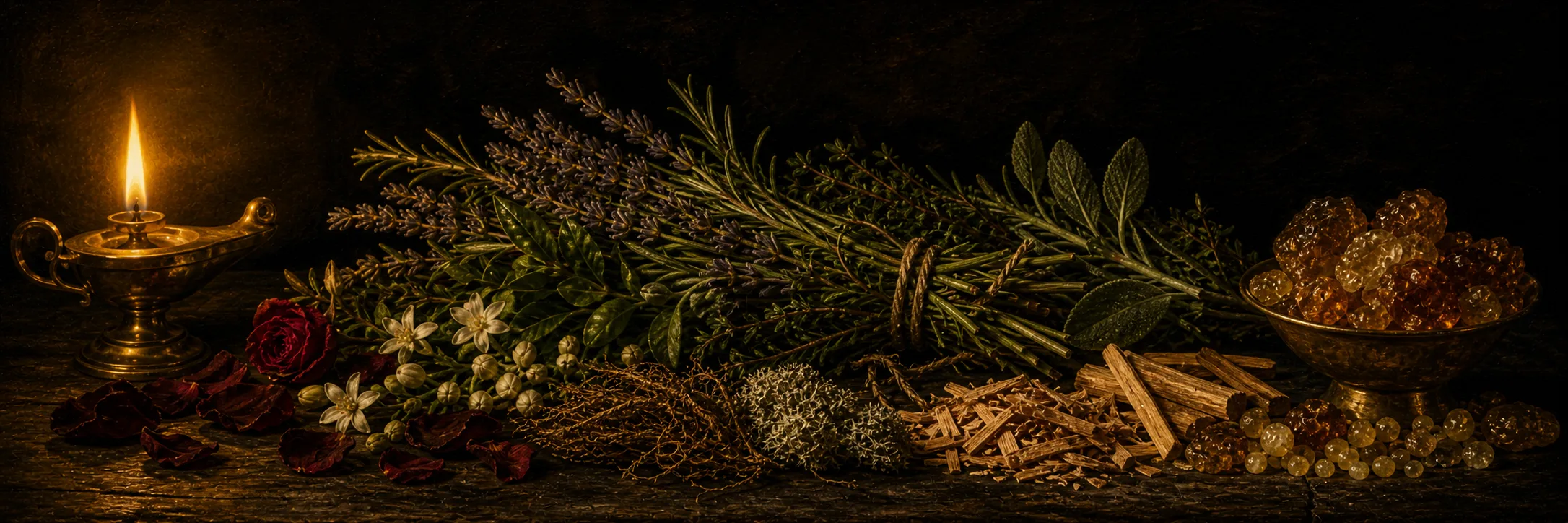
The first ten to twenty minutes are the signature: a cold, almost icy-metallic top of lavender (some perfumers reasonably suspect lavandin for the sharpness), rosemary, and petitgrain, with neroli softening the herbs into something cologne-bright rather than purely medicinal. There is no citrus blast; the freshness comes from the herbs themselves and from what Bois de Jasmin identifies as a textbook deployment of “dihydromyrcenol, the green pineapple flash of allyl amyl glycolate, and the woody amber dryness of Ambroxan.” The opening reads instantly as “luxury soap in a hotel you can’t afford” - a near-universal wearer discussions descriptor. Through the heart (one to three hours), spicy geranium and clary sage take over; galbanum contributes a sharp green bitter facet that gives the perfume its much-discussed “metallic” character. Jasmine is a soft, indistinct backdrop rather than a discrete floral note. There is no rose, no cinnamon, no sandalwood prominence - this is fundamentally a herbal-aromatic composition. The signature accord is the lavender-geranium-galbanum-vetiver square, sharpened by what Persolaise might call a sense of “cold polished metal.” The drydown (three hours onward) is dry oakmoss, vetiver, cedar, soft sandalwood (much subtler than in the original Egoiste - this is not a sandalwood scent), and a touch of amber. The base is where the perfume reveals its real quality: a clean, modern, well-mannered chypre-leaning fougere structure, similar in shape to Cool Water and Drakkar Noir but vastly more refined and lower-volume. Evolution is smooth and rather linear after the first hour; this is not a fragrance with dramatic stages. Listed labdanum (some note lists include it) and treemoss anchor the dry, slightly mineral close. The metallic-soapy character persists throughout and is the perfume’s polarizing signature.
Performance
Projection moderate in the first hour - within arm’s reach (30-60 cm) - then dropping to skin-level. Sillage is restrained-elegant rather than loud; this is not a beast-mode fragrance and was never intended as one. Longevity on skin: 5-8 hours for current formulations, 8-10+ hours for pre-2010 batches; on clothing: 12-24 hours. The 2014 reformulation (current standard) reportedly improved on the soapier, weaker 2010 version and brought back some of the herbal intensity; earlier versions (“Egoiste Platinum” wording on the square splash bottle, 1993-1998) were noticeably more potent and herbal, with a richer base. In moderate weather (spring and autumn) Platinum performs best. It is one of the rare fougeres that genuinely works year-round, though wearer reports warn it can become “vegetal and acrid” in 30C+ humid heat - the metallic-herbal facets amplify unpleasantly. In cold weather it tightens and becomes more refined. Best applied two to three sprays to chest, neck, and inner forearms; it is forgiving of overspray in a way the original Egoiste is not. The fragrance projects best on the first hour after a hot shower.
Wearing Context
The most versatile of Chanel’s masculines. Spring through autumn is the natural window; mild winter days work well. All-day wearable: office, dates, gym (low dose), evening dinners, weddings, weekend casual. Excels in business-casual and formal settings; performs equally well in fluorescent office light, restaurants, and outdoor daytime. Fails in very hot humid weather and in club settings (too quiet). Strong age-versatility: works on early 20s through 60+. Often cited on wearer discussions as “the perfect office fragrance” and “signature scent worthy.” Social-perception skew is unambiguously positive and consensus-clean: it reads as “well put together,” “classy,” “professional,” “mature without dated.” Compliments tend to come from women across age groups. It is rarely described as sexy or seductive; the perception register is closer to competence, polish, restraint. It is, in the words of Frolova, “everything that Egoiste is not.” Skews masculine but is genuinely unisex; some women wear it as a signature.
Comparisons & DNA
Egoiste Platinum sits at the center of the 1990s aromatic-fougere category and has clear DNA siblings. Azzaro Pour Homme (1978) is the genre’s founding document - sweeter, more anisic, more sun-warmed, less metallic. Platinum is drier, cleaner, more refined. Paco Rabanne Pour Homme (1973) is the rosemary-lavender ancestor - more rustic, more honeyed-tobacco, less polished; Platinum is its corporate descendant. Yves Saint Laurent Rive Gauche Pour Homme (Jacques Cavallier, 2003) is the closest contemporary cousin: similar aromatic-fougere structure with rosemary, lavender, and a clear “barbershop” register, but more powdery and tonka-sweet; Platinum is colder and greener. Geoffrey Beene Grey Flannel (1976) is the violet-mossy ancestor: more powdery, more 1970s, less refined. Creed Green Irish Tweed (1985) is the lemon-violet-iris fresh-aromatic alternative, less herbal, more wet-grass; one wearer reports compares Platinum to GIT directly. Davidoff Cool Water (1988) is the cheaper, more ozonic, more dihydromyrcenol-blasted cousin; Platinum is the same family done with restraint and better materials. Dior Eau Sauvage (1966) is drier-hesperidic-citrus and shares the gentleman’s-water register. Penhaligon’s Sartorial (Bertrand Duchaufour, 2010) is the modern barbershop-fougere interpretation - more beeswax, more old-school, less metallic. Clone alternatives in the affordable tier are the most credible for any Chanel masculine. Lattafa Yara Tous and Armaf Club de Nuit Sillage chase nearby territory but are sweeter; the closest budget approximation is Al Haramain L’Aventure for some of the herbal-fresh DNA, though it’s tilted toward Bleu de Chanel rather than Platinum. Internet consensus in wearer discussions gives MDCI Le Barbier de Tanger (niche, not cheap) as the most respectful homage to Platinum’s opening. No Maison Alhambra/Lattafa clone has nailed the metallic-galbanum character that defines Platinum; it is one of the harder fougeres to copy because so much depends on the dihydromyrcenol-Ambroxan balance and the quality of the geranium. Lineage: Platinum is descended structurally from the Azzaro/Paco Rabanne fougere template, with the dihydromyrcenol freshness of Cool Water layered in and Chanel’s quality control elevating both. It did not start a trend so much as canonize the “clean luxury fougere” mode and influence later refined aromatics (Sartorial, Dior Homme Sport, Tom Ford’s lavender flankers).
Reception
Critical reception is the most divided of the three Chanels covered here. Now Smell This (Robin Krug) is dismissive: “an instantly recognizable, mainstream, ‘clean,’ citrus-herbal ‘sport’ fragrance… Egoiste Platinum makes me yawn. Egoiste makes me purr.” Bois de Jasmin (Frolova) is more generous: “One can hardly find a better example of a modern fougere construction… clean, minimalistic, with just enough flair to be noticeable… as much as I admire Egoiste Platinum for the beauty of its materials and the elegance of its composition, it is reminiscent of dozens [of] other launches.” Luca Turin’s Perfumes: The Guide assessment is reportedly negative; in wearer discussions (thread 460403, “Egoiste vs. Platinum Egoiste”) a regular paraphrases Turin’s verdict as “It isn’t godawful, but has too much of the Vegas vibe” - a wearer-attributed paraphrase that has wide currency though it has not been independently verified as verbatim book text. Wearer response is much more positive than critic reception, with the perfume often described as a “modern classic” of barbershop fougeres. Sergey Borisov’s wearer discussions essay “In Reverence of Egoiste Platinum’s Chiaroscuro” articulates the consensus enthusiast view: it is a “Bond or BMW-styled scent that exercises introverted restraint but maximises gravitas.” Common praise: versatility, quality, sophistication, year-round wearability, classy presentation, women’s compliment rate, value relative to the Chanel premium. Common criticisms: similarity to other fougeres, occasional metallic harshness, weaker performance in current formulations, “dated barbershop” register for younger noses, reformulation drift. Polarization axes: 1) generational (wearer discussions under-25 users frequently call it “old man” or “dated”; 30+ wearer discussions hold it as a benchmark); 2) heat tolerance (it polarizes sharply in summer); 3) original vs reformulation drama. Blind-buy verdict: yes for office/business use and for fans of aromatic fougeres generally; no if you find Cool Water or Sauvage boring.
Versions & Reformulation
Three meaningful versions in commercial history: - 1993-1998 “Egoiste Platinum” (square splash bottle): the original Polge formula, herbal-intense, longer-lasting, more potent base. wearer discussions consensus holds this as the reference; - 1998-2010 “Platinum Egoiste” (tall bottle, renamed): reformulated, slightly thinner base, still quite potent; - 2010-2014 transition to a softer, soapier, more office-friendly formula that many regret; - 2014 reformulation (current, the square bottle with sprayer): reportedly restored some of the earlier potency and is the version recommended in wearer discussions today. Bottle numbering and label wording (the word-order swap between “Egoiste Platinum” and “Platinum Egoiste”) is the most reliable visual indicator of vintage. The herbal-aromatic top has remained relatively stable across versions; the base has been progressively lightened.
Acquisition Notes
Designer-luxury tier, Chanel pricing. Per Sephora.com’s current product page for Platinum Egoiste Eau de Toilette (verified May 2025), the 50 ml (1.7 oz) retails at $115 and the 100 ml (3.4 oz) at approximately $155. The 150 ml flacon and travel sets appear seasonally. Widely available at department-store Chanel counters worldwide (it has been more widely distributed than the original Egoiste throughout its history).
Notable Facts & Lore
- Platinum Egoiste’s creation story is a candid case study in market-driven reformulation.
- The original Egoiste’s American commercial disappointment (per the Polge interview circulating in wearer discussions and confirmed by Frolova at Bois de Jasmin: “Egoiste was a market failure…
- [its] plummy and gilded form did not fit at all with the streamlined, ‘shower clean’ trends of the 1990s“) prompted Chanel to commission a fougere “to recover at least something from the Egoiste franchise.”
- Polge himself reportedly viewed the assignment less affectionately than the original - the original Egoiste is the one he names as his favorite - but he delivered a textbook modern fougere anchored in dihydromyrcenol, allyl amyl glycolate, and Ambroxan, the three workhorse molecules that defined 1990s freshness.
- A Jean-Paul Goude commercial accompanied Platinum’s launch as well (1994), featuring an athletic male protagonist in a Roman-coliseum-style setting - visually distinct from the 1990 Egoiste balcony commercial but using the same name to deliberately blur the line between the two products.
- The naming has been a perennial source of consumer confusion; on wearer discussions there are running threads from buyers who purchase one expecting the other.
- The perfume has accumulated a steady undercurrent of YouTube praise - Jeremy Fragrance, Curly Fragrance, and other masculine-influencer creators have repeatedly recommended Platinum as a “signature scent” candidate and a “best masculine Chanel,” which has driven steady younger interest since roughly 2018.
- Despite never having had a single viral moment, Platinum has become Chanel’s quietly best-selling masculine of the post-Antaeus era - and has decisively outsold the original Egoiste, with which it shares almost nothing but a name.