Chanel — Chanel N°19
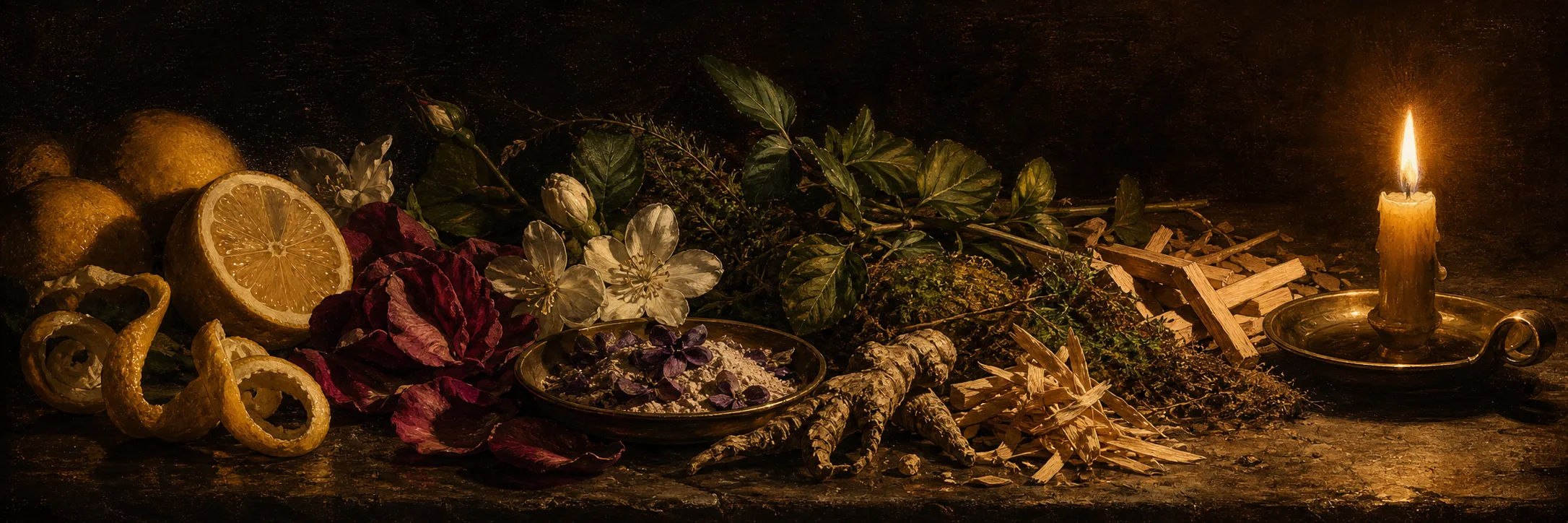
Essence
N19 is the great green chypre-floral of the Chanel canon: a galbanum-and-iris construction that opens with the cold bite of a freshly snapped stem and dries into mossy, suede-like restraint. Built in 1970 by Henri Robert as the last fragrance Coco Chanel signed off before her death, it is more austere, more “wire mother” than the cuddly aldehydic warmth of N5. It reads as aloof, polished, and slightly defiant - a perfume that smells of cut grass, silvery orris and dry leather rather than anything conventionally “sexy.”
Scent Profile
The opening is the loudest and most defining stretch: a slap of galbanum - bitter, vegetal, reading like sliced green pepper, cut grass and crushed stems - sharpened by bergamot and neroli, with hyacinth adding a dewy, slightly metallic green. There is a cool, fizzy sparkle up top that many perceive as aldehydic even though aldehydes aren’t formally listed; it’s likely the galbanum-citrus interplay. This is the phase that polarizes: to detractors it’s “green plastic” or putrefied leather; to devotees it’s the crispest, most aristocratic green in perfumery. By the heart (roughly the first one to three hours), the bite recedes and iris moves forward - rooty, silvery, cool and powdery, the structural spine of the whole composition. Rose, jasmine, ylang-ylang, narcissus and lily-of-the-valley cushion the orris, but they function as a textural platform rather than a soliflore; the florals are present but submerged beneath the iris’s dry, starchy character. Linearity-wise, N19 is an evolution rather than a linear scent, but its arc is narrow and disciplined - it shifts in temperature (cold green to warm-cool powder) more than in identity. The drydown (three hours plus) is where vintage and modern diverge most. In the classic/parfum the base is a genuine green chypre: oakmoss, vetiver, sandalwood, cedar and a wisp of smoky leather hovering close to skin. Tania Sanchez famously likened it to “a fabulous pair of leather boots.” In the current EDT the leather and oakmoss are thinned by IFRA restriction, leaving a grassy, vetiver-and-clean-musk finish that reads more woody-floral than full chypre. The signature accord throughout is the push-pull tension between tangy galbanum and rooty, languid iris - that contrast is the whole point of the fragrance.
Performance
Projection is light-to-moderate for the modern EDT - it announces itself for the first hour (galbanum is loud), then settles into a refined, arm’s-length presence rather than a room-filler. Sillage is modest; this is a perfume that rewards proximity. Longevity on skin for the current EDT runs roughly 3.5-4 hours per long-term wearers, noticeably shorter than the parfum’s ~6 hours; on clothing it lasts considerably longer, and iris and vetiver have a deceptive quality where the wearer goes nose-blind while others still detect it hours later. The EDP and parfum project and last better than the EDT. It performs best in mild-to-cool conditions and in dry air; the galbanum and green facets read crisp and elegant in spring temperatures, while heat can accentuate the bitter green edge for those sensitive to it. In cold weather the iris-vetiver base can feel a touch thin in the EDT. Best application strategy among devotees is to spray generously (the EDT is not strong) and to use it on clothing as well as skin, where the green notes hold far longer; some layer EDT over EDP/parfum to extend it.
Wearing Context
N19 is a daytime, transitional-season scent at heart - it shines in spring and early autumn, and in cooler summer weather, where its verdancy reads as fresh rather than heavy. It is the archetypal “polished professional” fragrance: aloof, formal, and quietly commanding, frequently described as making the wearer feel upright, regal, almost armored. It excels in office and formal daytime settings, gallery-and-luncheon territory, and on anyone who wants distinction without sweetness. Where it falls flat: it is a poor choice for anyone seeking a warm, cozy, crowd-pleasing “compliment magnet.” The galbanum opening can read as cold or severe in casual, sweet-skewing social environments, and it is decidedly out of step with the gourmand-amber zeitgeist. Socially it carries a strong “classic/older” perception skew - it’s strongly associated with women who have worn it for decades, which is a badge of honor to some and off-putting to younger buyers raised on sweet musks. It is genuinely unisex on the right wearer; in vintage form it reads more “masculine” by today’s mall standards than most men’s counters.
Comparisons & DNA
N19 sits in the green-chypre lineage alongside its closest relatives. Within Chanel, Cristalle EDT (also Henri Robert, 1974) is the sibling - a brighter, sharper, more citrus-forward green chypre without N19’s iris depth. Estee Lauder Private Collection and Jean Patou’s discontinued greens occupy similar territory. Niki de Saint Phalle and Sisley Eau de Campagne are greener, sharper and cheaper. Yves Saint Laurent Y and Deneuve are cousins of the same era. For the iris facet specifically, Prada Infusion d’Iris is a softer, cleaner, benzoin-warmed take that loses N19’s galbanum bite; Hermes Caleche shares the soapy-woody-aldehydic elegance with more leather. Margiela Replica Untitled is frequently cited by wearers as a similar but more floral and more affordable green. For the galbanum-leather austerity, vintage Balmain Vent Vert (greener, simpler) and Robert Piguet Bandit (dirtier, more leather) are reference points. The in-house flanker N19 Poudre (2011, Jacques Polge) is the most direct comparison: it strips out the galbanum bite and leather, foregrounding a clean, rooty iris over white musk, vetiver and tonka - softer, sweeter, more powdery and far more “modern department-store” in feel. Critics broadly judged it a pretty but hollowed-out reinterpretation with weak performance (more below). No true “clone” of N19 exists in the designer/Arabian space - its galbanum-iris-oakmoss structure is too specific and too out of fashion to have spawned cheap copies, which is itself a marker of its singularity. Lineage-wise N19 is a benchmark green chypre that helped define the genre’s “cold, green, defiant” register.
Reception
Wearer response treats N19 as a bona fide masterpiece and a litmus test for taste - “drips class and sophistication,” “the most over-looked Chanel,” with many calling it superior to N5. The most consistent praise is for its unique galbanum-iris contrast and its aristocratic, unisex elegance. The most consistent criticisms are two: the galbanum opening polarizes (a minority find it harsh, “green plastic,” or like “old putrefied leather shoes”), and - far more heated - the modern reformulations are widely mourned as pale shadows of the vintage, with the leather and oakmoss gutted by IFRA restrictions. critics revered it. Luca Turin and Tania Sanchez gave it four stars in Perfumes: The Guide; Sanchez later said she “regret[s] not giving five stars to… Chanel No. 19… I was too timid.” Turin’s summation praised “Chanel’s mastery of raw materials and orchestration.” Victoria Frolova of Bois de Jasmin wrote that “Chanel No. 19 needs no words of praise because its beauty renders them superfluous,” admiring how “the aggressive verdancy of galbanum, the woody duskiness of iris” meld “from the emerald dew of the top notes to the leathery suppleness of the base.” She also documented the famous reformulation cause, writing: “When Chanel No 19 was created in 1971, it was formulated with a superb grade of Iranian galbanum oil… when the Iranian Revolution broke out in 1979, the oil became unavailable. No 19 had to be reformulated, which was accomplished with much difficulty, because the original galbanum oil was of a particularly fine, rare caliber.” Blind-buy verdict: safe for anyone who already loves green or iris fragrances, but sample first if you’re unsure about galbanum - it’s a love-it-or-hate-it note. For chypre lovers, buy the parfum or hunt vintage; the current EDT is the most divisive purchase.
Versions & Reformulation
N19 exists in multiple concentrations and many vintages, and the differences matter. The parfum/extrait is the richest, darkest and most leathery, holding the truest chypre character. The EDP, reworked to remain faithful by Oliver Polge, is rosier, softer, dewier and more floral, with iris subtle and vetiver replacing much of the oakmoss. The EDT is the greenest and most galbanum-forward but, in current form, the thinnest in the base. Reformulation is the central versions issue. Vintage bottles (especially pre-1990s, and the rare late-1970s Iranian-galbanum parfum) are dramatically deeper, mossier and more leathery; collectors hoard them. The principal driver was the loss of Iranian galbanum after 1979 plus progressive IFRA oakmoss restrictions from the late 1980s onward. A further reformulation occurred roughly a decade ago (wearers date a perceptible change to the mid-2010s, losing leather and iris in the EDT), and Chanel issued a 2023 EDT version foregrounding green and powdery iris-pallida notes - some longtime wearers find this latest version “too friendly and clean.” Telling old from new EDT: vintage runs yellow-green, modern runs brighter green.
Acquisition Notes
N19 is luxury-designer pricing - Chanel’s standard fragrance tier - and remains in production in EDT, EDP and Parfum (the N19 Poudre flanker has effectively been discontinued/is hard to find). The current EDT (ref. 119690) retails around $177 for 100ml in the US, with a UK RRP of roughly 120/100ml. Bottle sizes center on 100ml sprays; the 50ml EDT has reportedly been phased out in some markets, and parfum now appears mainly in small 7.5ml format.
Notable Facts & Lore
- The “19” commemorates Gabrielle “Coco” Chanel’s birthday, 19 August.
- The fragrance was composed by Henri Robert and launched in 1970-71 when Chanel was 86-87, a year before her death - it is the last scent she launched and wore, reportedly gifted to favored clients before its public release.
- Chanel herself told a story (recounted in period interviews) of being stopped outside the Ritz by a stranger asking the name of her perfume - “To be stopped in the street by a man at my age, that’s not bad, is it?”
- Chanel’s own period advertising leaned into its difficulty and independence, using slogans like “The Unexpected Chanel,” “The Outspoken Chanel” and “Devastatingly Feminine.”
- The perfume was conceived as a deliberate counterpoint to the by-then-ubiquitous N5: prickly, green and unconventional where N5 had become a universal standard.
- Tania Sanchez’s “wire mother” framing - as opposed to a “snuggly” maternal warmth - has become the single most-quoted critical shorthand for its character.
- The galbanum-sourcing crisis tied to the 1979 Iranian Revolution is the rare case of geopolitics directly reshaping a perfume’s formula.