Chanel — Bois des Iles
Essence
The 2007 Bois des Iles EDT is Jacques Polge’s reissue, for the original Les Exclusifs launch, of Ernest Beaux’s 1926 composition - the first woody fragrance ever marketed for women. With Mysore sandalwood (the heart of the original) now endangered and restricted, Polge constructed an “imagined sandalwood” accord using other materials, then layered Beaux’s aldehydic-floral signature on top. The result is a creamy, powdered, gingerbread-tinged sandalwood with a No. 5-adjacent floral opening - a fragrance enthusiasts describe as the warmest, most cashmere-like masterpiece in the Chanel feminine canon. Discontinued in 2016 when the Les Exclusifs line moved from EDT to EDP, the 2007 EDT is now collector-bottle material.
Scent Profile
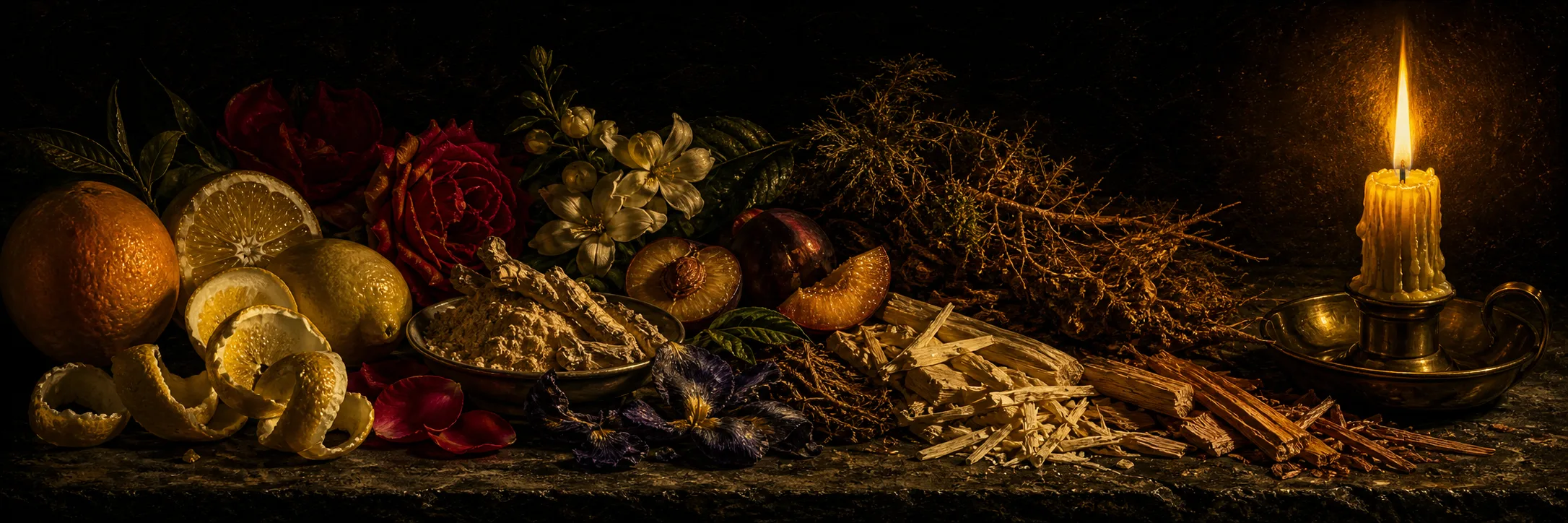
The opening is unmistakably Chanel: a soft burst of aldehydes that read as soapy-shimmery rather than effervescent, with bergamot, mandarin, neroli and a tiny peach lift floating above. The aldehydes are dialed down versus No. 5 - gentler, more nuanced. Within five minutes the peach becomes more perceptible (one of the Beaux signatures preserved in the Polge reissue), reading as a slightly fuzzy, cola-bright fruit rather than as juicy nectar. Coriander adds a soft spicy ground. By the fifteen-to-thirty-minute mark the florals emerge and the sandalwood begins to stir. The floral heart - ylang-ylang, iris, jasmine, rose, lilac, lily-of-the-valley - functions as a unified rosy-creamy floral cloud rather than as discrete identifiable florals. Ylang-ylang is the most assertive, providing a creamy, slightly banana-tropical sweetness that connects to the sandalwood base. Iris and orris contribute powdered elegance; rose adds depth without rose-soliflore obviousness. The middle stage is the EDT’s defining moment: a warm, creamy, gingerbread-tinged sandalwood begins to dominate. The “sandalwood” is a constructed accord - Polge has confirmed publicly that he could not use Mysore sandalwood due to species protection and used a blend of other woods and aromachemicals to recreate the impression. The accord works remarkably well: creamy, slightly milky, with a spicy-sweet gingerbread undertone (the warming spice combination of coriander, cinnamon-adjacent warmth, tonka and amber). Vetiver provides subtle dry-grass depth. Drydown (three-plus hours) is a soft, powdered, creamy sandalwood-vanilla-tonka skin scent. Benzoin and opoponax (in the original 1926 base, partly preserved in 2007) add warm balsamic notes. Signature accord: aldehydic floral opening over creamy gingerbread sandalwood - what Tania Sanchez called “the brunette sister of No. 5.” The fragrance evolves clearly through three stages (aldehyde-floral / floral-wood / sandalwood-amber) rather than running linear.
Performance
Projection is moderate at first hour, dropping to skin-close by the second. Bois des Iles EDT is famous for shorter performance than its reputation suggests - wearers report wildly inconsistent longevity, with some seeing twelve hours and others thirty minutes. Six to eight hours on skin is typical; on clothing, twelve to eighteen hours, especially on wool and cashmere where the woody-balsamic base clings. Cold weather is its element. The creamy sandalwood and balsamic base want to be warmed by body heat without humidity competing. Autumn and winter are prime; spring is workable; summer is the wrong season - the fragrance reads heavy in heat. Application: spray generously to compensate for the EDT’s relatively modest projection; three to five sprays to skin and hair.
Wearing Context
Cool-weather, evening-coded, formal-elegant. Bois des Iles EDT is dinner-and-opera material, the fragrance of well-tailored cashmere and dim restaurants. It also reads well in cold daytime - winter walks, brunch in December, indoor warmth against outdoor chill. Unisex by composition though marketed feminine; men who wear sandalwood-amber (Egoiste, Samsara) can wear Bois des Iles comfortably. Settings where it falls flat: hot weather (heavy), casual daytime (over-elegant), club environments (too quiet), athletic contexts (wrong register entirely). Social perception is “discreet luxury” - Bois des Iles whispers expensive rather than announcing it. People who recognize Chanel respond to it; those who don’t read it as “warm and beautiful” without identifying the source.
Comparisons & DNA
Within Chanel: closest sibling is No. 5 (which Bois des Iles is widely described as a woody sibling to) and Coromandel (the more spicy-incense relative). Both Chanel Egoiste (1990) and Bois Noir (1987, discontinued) are explicitly described as masculine Bois des Iles - Bois Noir was Polge’s spiritual prequel to Egoiste, and both were designed as the woody-sandalwood counterpart to Beaux’s original. Egoiste shares the creamy-spicy-sandalwood character with more cinnamon and rosewood. Outside Chanel: Guerlain Samsara is the most direct peer - both are creamy sandalwood-vanilla-jasmine compositions from the late 80s/early 2000s, with Samsara louder and sweeter. Serge Lutens Santal Blanc and Santal de Mysore are the niche sandalwood comparisons; both are denser and less floral. Lutens Bois et Fruits shares the woody-fruit DNA. Frederic Malle Dries Van Noten par Frederic Malle is sometimes mentioned as a modern descendant. Chanel No. 22 is the powdered-aldehyde-floral cousin without the sandalwood. Clones: none of note. The Les Exclusifs are not heavily cloned because the brand prestige is part of the appeal and the formulations are subtle enough that clone houses don’t easily replicate them. Dua Brand offers a Bois des Iles dupe of uncertain quality. Lineage: Bois des Iles is documented as the first woody fragrance composed for women in Western perfumery (1926). It is the direct ancestor of the entire women’s-sandalwood category - Samsara (1989), Lorenzo Villoresi Sandalo, Serge Lutens Santal Majeur and others trace structurally back to Beaux’s composition.
Reception
Critical reception is reverential. Tania Sanchez gave Bois des Iles five stars in Perfumes: The Guide (2008): “What Ernest Beaux’s plush Cuir de Russie did for leather, his cozy Bois des Iles did for sandalwood. Though I’ve never worn a sable stole, I insist it must feel like Bois des Iles: a dark, close, velvety warmth, sleepy and collapsingly soft… It is basically perfect and, though over eighty years old, seems as ageless as everything Chanel did in those inventive years. If you think of all the best Chanel fragrances as varieties of the little black dress - sleek, dependable, perfectly proportioned - Bois des Iles is the one in cashmere.” Luca Turin, in The Little Book of Perfumes (2011), echoed and extended Sanchez’s review: “An exercise in illusion via allusion. Wear it and after a few hours you will find your daily life suffused by the same feeling of peace you get when you settle into an armchair after tidying your apartment from end to end… I have worn it on and off for years, whenever I felt I needed extra insulation from the cold world.” Bois de Jasmin (Victoria Frolova) has reviewed Bois des Iles repeatedly and considers it among the great Chanels. Kafkaesque wrote a definitive 2013 review describing the EDT as “smoldering sensuality that purrs like a languid cheetah resting on a sandalwood branch” and treating it as one of the finest Chanel reissues. Common criticism: shorter longevity than the price suggests, and post-2010 reformulation feeling thinner than 2007-2009 bottles. Blind buy verdict: yes for anyone who loves sandalwood - but seek vintage if possible.
Versions & Reformulation
Bois des Iles has had three documented modern formulations: the 1926 Ernest Beaux original (Mysore sandalwood-based, available as parfum extrait, sold continuously at Chanel boutiques as an ultra-luxury heritage item - the parfum extrait remains in current production as of 2026, sold at Chanel boutiques and on chanel.com in the 15ml format under reference 120011); the 2007 Les Exclusifs Eau de Toilette reissue by Jacques Polge (constructed sandalwood accord, sold 2007-2016, now discontinued); and the 2016 Eau de Parfum reformulation (which replaced the 2007 EDT and is the current EDP variant). The 2007 EDT is the version this dossier covers. It was discontinued in 2016 when Chanel converted Les Exclusifs to EDP concentration. Surviving bottles are now collector items - 200ml bottles in good condition trade above retail on wearer discussions classifieds.
Acquisition Notes
The 2007 EDT is discontinued and out of regular distribution as of 2016. Prices for authentic, sealed 200ml bottles range from $300 to $600+ depending on batch and condition. The current EDP (separate catalog item) is the official replacement at Chanel boutiques. For decants of the 2007 EDT specifically, Surrender to Chance has historically stocked it and The Perfumed Court occasionally offers it; both source from pre-discontinuation bottles.
Notable Facts & Lore
- The 2007 EDT was the headline reissue of the Les Exclusifs launch - Chanel framed the entire collection as a chance to bring archival Chanel compositions back into circulation, and Bois des Iles was the centerpiece.
- Polge, in trade press at the launch, acknowledged that recreating Beaux’s formula was impossible due to the Mysore sandalwood ban (CITES restrictions on Indian sandalwood took effect in stages from 1998 onward) and stated his approach was to construct an impression of Mysore using other materials.
- The original 1926 fragrance was inspired, according to some accounts, by Ernest Beaux’s love of Tchaikovsky’s opera “The Queen of Spades” - though wearer discussions Octavian Coifan and others have noted that documentary evidence dates Bois des Iles’ formal release to 1928 rather than 1926, with trademark records supporting the later date.
- The “1926” date is what Chanel uses in heritage marketing.
- Cultural footnote: Coco Chanel was the first major couturier to bottle a “woody perfume for women,” and Bois des Iles was the composition that established the category.
- Tilar Mazzeo’s *Secret of Chanel No.
- 5* and other Chanel histories treat Bois des Iles as the bridge between No.
- 5 (1921) and Cuir de Russie (1924/1927) in Beaux’s Chanel period - the third pillar of the Beaux trilogy that defined the house’s pre-WWII identity.