Chanel — N°18 Eau de Parfum
Essence
N°18 is Chanel’s resident oddball within Les Exclusifs, an ambrette-seed showcase that foregrounds a vegetal, musky, slightly boozy and fruity material most houses use only in trace amounts. This 2016 Eau de Parfum is the relaunched concentration of the original 2007 Eau de Toilette, issued when Chanel converted the Les Exclusifs editions to EDP. Built around ambrette over iris and a dewy, almost grappa-like rose, it is widely called the most abstract and cerebral Chanel currently sold, a study in erasure that many read as a deconstructed, woods-and-spice-stripped echo of Egoiste. It is loved by a small, devoted minority and quietly overlooked by most.
Scent Profile
The opening is genuinely strange. Ambrette’s vegetal musk arrives immediately, paired with an overripe, watery fruit accord that wearers variously call pear (specifically Williams pear, even a pear-cognac liqueur), grape, melon, even dill pickle to some noses. Critics describe a silvery blast of pear brandy enwreathed in a rooty iris that smells as if it came from concrete.
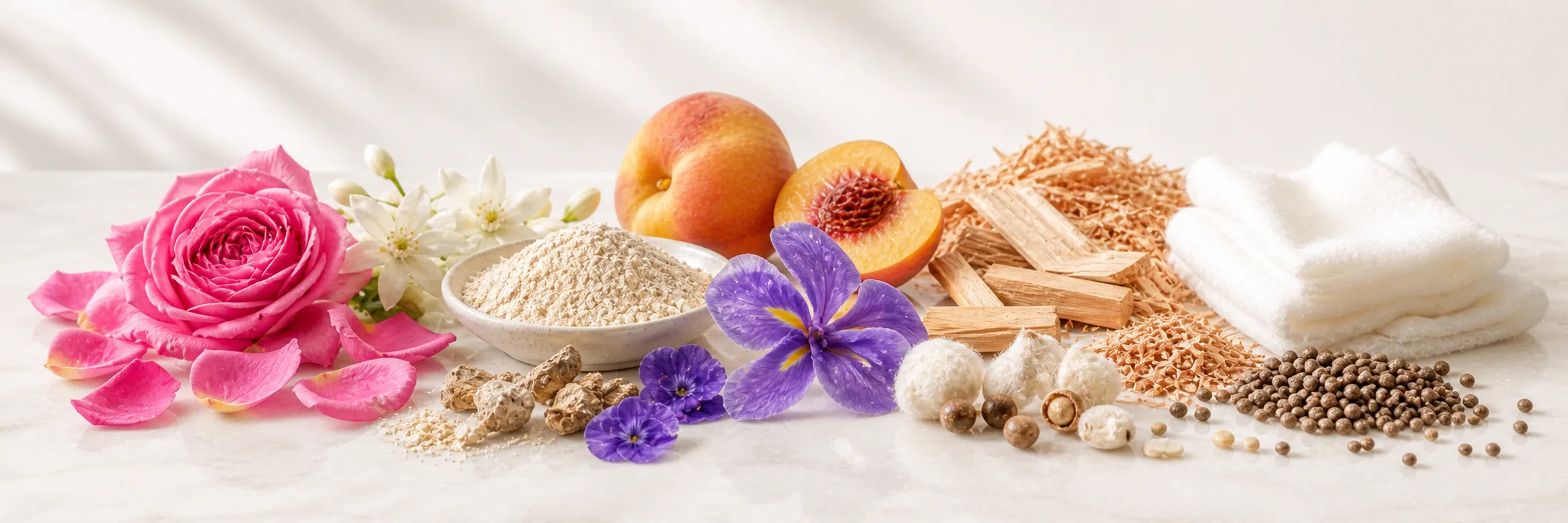
The heart is the centerpiece for admirers: ambrette coalescing with orris and iris into a creamy, baby’s-head tenderness, a your-skin-but-better muskiness, lifted by a dewy rose and a minty, rooty geranium. The rose reads watery and almost grappa-like rather than jammy, and the whole effect stays cool and refined.
The drydown is a sheer, soft musky sandalwood with the orris turning faintly leathery and suede-like. The fragrance is quasi-linear and cool, even metallic in character, often described as aloof, icy and evanescent. The signature accord is ambrette musk over iris and watery rose. Compared to the 2007 EDT, the EDP is generally felt to be warmer, rosier, sweeter and a touch more conventional, the EDT’s quirky eau-de-vie opening softened and shortened, the ambrette arriving sooner and lasting longer.
Performance
Performance is deliberately quiet. Wearers describe it as almost a skin scent with low sillage and projection, with one experienced wearer citing roughly six hours of longevity and moderate projection. A Cafleurebon reviewer called it fleeting, ethereal, elegant and compellingly evanescent, noting it lasts longer on oilier skins and re-blooms with body heat. The practical reading: this is an intentional near-skin scent. Apply liberally, expect intimacy rather than a trail, and know that dry or older skin may shorten it further.
Wearing Context
N°18’s cool, refined, unsexed character makes it a versatile daytime and office-appropriate wear despite being marketed to women; multiple male wearers report wearing it to the office with occasional compliments, and it is treated as genuinely unisex. One reviewer found it simply marvelous in summer when kept cool, the application to skin providing instant refreshment, which fits its icy, evanescent profile. In short, it is a connoisseur’s quiet-luxury scent for someone who wants an unusual, intellectual signature worn close, well-suited to warm weather and professional or cultured settings and less suited to occasions demanding projection.
Comparisons & DNA
The defining comparison is internal: N°18 and Chanel Egoiste share a rose that links them, and reviewers call N°18 “Egoiste with the spices swapped for herbal teas and the sandalwood for heaps of ambrette,” a deconstructed, minimalist echo of Egoiste with the woody heft and vanillic sandalwood erased. It is repeatedly grouped with Chanel 28 La Pausa as the most cerebral of the Exclusifs, sharing that line’s quiet, iris-driven refinement. Beyond Chanel, it stands as a reference point for the ambrette note itself, one of the truest ambrette fragrances on the market, which makes it a touchstone rather than a clone of anything. Its broad DNA is a minimalist, musk-and-iris floral-woody built on botanical ambrette rather than the aldehydic Chanel signature.
Reception
Reception is a study in being underrated. The devoted minority calls it beautiful, strange and unexpected, a masterwork, one of Chanel’s most underrated perfumes, prizing the ambrette as olfactory art, a perfume you see rather than smell. The detractor camp finds it weak, too abstract, or memorably dill-pickle-like; a Cafleurebon reviewer documented that several perfume bloggers proclaimed it smells like dill pickles and that it languished on the shelves, misunderstood and expensive. Polarization runs along three axes: ambrette love versus ambrette anosmia or aversion, appreciation of minimalism versus expectation of Chanel opulence and performance, and EDT purists who prefer the discontinued original’s cold, bitter sparkle to the warmer EDP. The near-unanimous advice is not to blind-buy: the notes tell you almost nothing about how it smells, and it is a grower that rewards repeated wearing.
Versions & Reformulation
There are two distinct products under the N°18 name. The original was a 2007 Eau de Toilette in Les Exclusifs, created by Jacques Polge with Christopher Sheldrake. In 2016 Chanel discontinued the Les Exclusifs EDT line and reissued the range as Eau de Parfum, and N°18 EDP is that relaunch. The two are not a simple concentration bump: reports describe the EDP as a tweaked, recontextualized formula that is warmer, sweeter and rosier, with the quirky eau-de-vie opening softened and the ambrette brought forward, such that some reviewers call the EDT and EDP two completely different perfumes, and a number of fans prefer the discontinued EDT. There is an authorship wrinkle worth noting: Chanel’s official site credits the EDP composition to Olivier Polge, the house’s in-house perfumer creator, while most outside references credit Jacques Polge as the original creator. This is best read as a custodian-versus-original-author distinction; Jacques Polge authored N°18, and the 2016 EDP carries Chanel’s standard current-perfumer credit.
Acquisition Notes
N°18 EDP is a Les Exclusifs boutique-exclusive fragrance at premium pricing, sold in 75 ml and 200 ml. It is distributed almost exclusively through Chanel boutiques and a small set of authorized luxury retailers, and Chanel restricts discounter distribution, so it is rarely found through grey-market channels. The discontinued 2007 EDT trades on the secondary market as a rare formulation and draws collector interest from those who prefer it. The recommended channel is a Chanel boutique, where sampling is also the advised first step given the polarizing profile.
Notable Facts & Lore
- The name references 18 Place Vendome, the address of Chanel’s Fine Jewelry boutique, and Chanel frames the scent as a perfume of fine jewelry designed to evoke rare and sparkling gems.
- Gabrielle Chanel was a long-term resident of the Ritz on the same square.
- Ambrette seed, the star material, is a botanical musk most houses use only in trace amounts; N°18 makes it the lead.
- It is widely regarded as the most abstract and cerebral fragrance in the Les Exclusifs line.
- Its most-documented lore is its commercial fate: it was the misunderstood oddball that even boutique staff reportedly didn’t care for, leaving it to languish on shelves, which is precisely why its admirers champion it as Chanel’s most underrated release.