Chanel — Le Lion Eau de Parfum
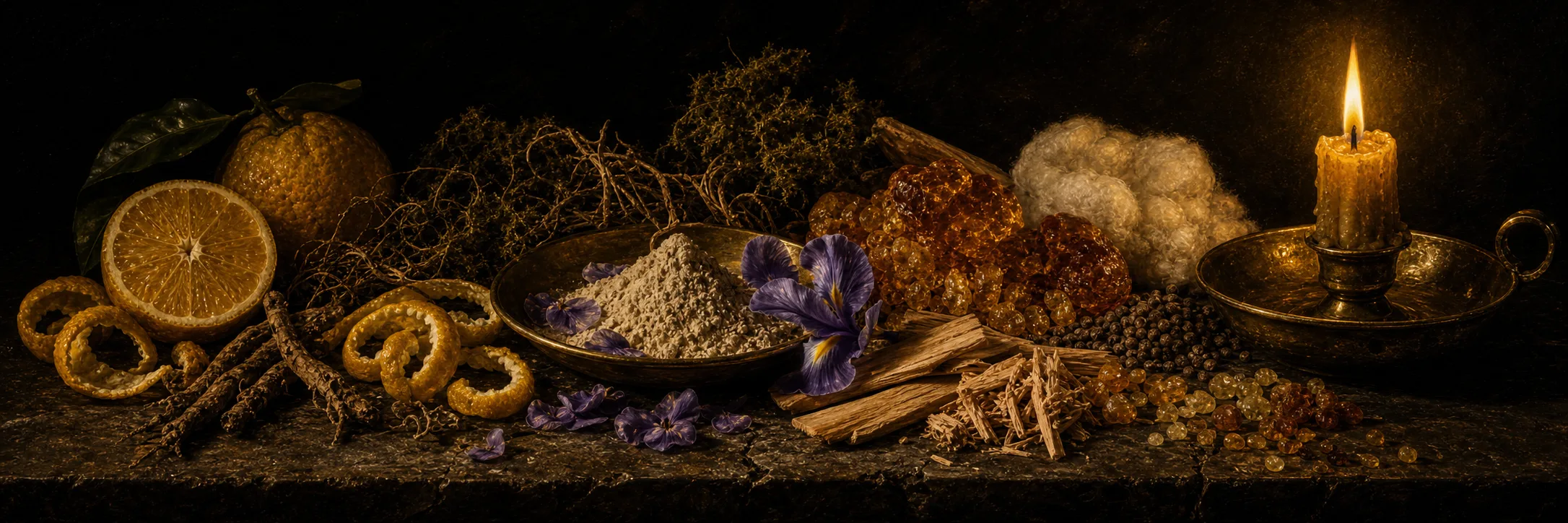
Essence
Le Lion de Chanel is Olivier Polge’s 2020 Les Exclusifs entry and Chanel’s first true amber oriental - a warm, radiant, labdanum-driven amber with a luminous bergamot-lemon opening, a leathery-resinous heart, and a creamy Madagascar-vanilla, patchouli, sandalwood and musk base. Named for Coco Chanel’s Leo zodiac sign, it deliberately flirts with Guerlain-Shalimar/Emeraude “oriental” territory while keeping Chanel’s bright, aldehyde-tinged signature. Widely regarded as one of Chanel’s best 21st-century releases - and held back only by Exclusifs pricing and limited public discovery.
Scent Profile
The opening is a “solar,” sparkling bergamot-and-lemon fanfare - bright, almost aldehyde-lifted (Chanel’s signature shimmer, though aldehydes aren’t listed), described by Cafleurebon as a “clarion lemon/bergamot trumpet” and “truly solar.” Within moments, though, the citrus is overrun: a “HUGE throbbing punch” of smoky, sticky labdanum rises up, and this is the soul of the fragrance. The signature accord is that labdanum amber - golden, resinous, slightly smoky, with a suede/leather facet (Polge specifically refined a cistus labdanum essence to intensify its “velvety and leather facets”). Many also detect an unlisted incense smokiness and a Cuir de Russie-style leather threading through.
In the heart (1-3 hours), the composition turns “cold, regal, austere” before warming: the labdanum stays central, joined by a resinous, slightly cool incense and a benzoin-like nuance, with the leather impression most pronounced here. Critically, Le Lion smells animalic without containing animal-derived materials - the critic consensus attributes this to a musk cocktail plus possibly an unlisted birch-tar or quinoline leather facet. Vanilla begins threading in, softening edges.
The drydown (3+ hours) is the plush payoff: a warm, cozy, creamy Madagascar vanilla (Polge used an in-house infusion of “exceptional beans”) blankets a base where patchouli comes forward and the labdanum persists as a “huge, beautiful central note.” Sandalwood and patchouli are firmly second-fiddle, grounding rather than starring. Some find the vanilla pushes it “quasi-gourmand”; others read a dusty, waxy, “600-year-old book” vintage warmth. It is moderately evolving rather than linear - a genuine arc from solar citrus through cold resinous leather to warm vanillic amber. Labdanum, bergamot and lemon, vanilla, leather, and patchouli read most clearly, while incense, aldehydes, and birch-tar leather are sensed rather than listed.
Performance
Performance is a strong point and somewhat unusual for the often-sheer Les Exclusifs line. Longevity is excellent: critic and wearer reports cluster at 12-14 hours, with the far drydown of warm resins detectable on skin into the next day and lasting even longer on clothing - call it ~10-14+ hours skin, 24+ hours on fabric. A dissenting minority report only 5-6 hours, likely batch- or skin-dependent (see Versions). Projection and sillage are best described as moderate-but-satisfying rather than nuclear: Colognoisseur calls sillage “average,” while others find it “thumpingly strong”; the consensus is a warm, noticeable bubble that others will catch up close and at conversational distance, not a room-filler. It is unmistakably a cold-weather performer - reviewers repeatedly call it perfect for “the dead of winter,” “a great big fur coat,” and warn it can become heavy or “a completely different fragrance” in heat as the natural labdanum releases different facets. Best application: two sprays is plenty for all-day; restraint is advised because the labdanum is potent and can tip heavy/animalic if overdone.
Wearing Context
Le Lion is a fall/winter, evening-leaning fragrance first and foremost - its warmth, resinous depth and longevity make it ideal for cold weather, dressed-up dinners, and intimate evening settings. That said, several owners successfully wear it year-round and even daily, finding it “comforting and fresh while still maintaining a deep structure,” and a few report it as office-appropriate if sprayed lightly (a 50-something reviewer wears it in a small office and gets compliments). Where it falls flat: hot, humid summer days, where the labdanum can read cloying or “thumpingly” heavy; and very casual/sporty contexts where its opulence is mismatched. It is genuinely unisex but skews slightly masculine versus Coromandel due to the animalic-leather facet, while reading more “feminine/regal” to others - in practice it suits anyone comfortable with a rich amber. Social-perception skew: it reads “wealthy, expensive, high-class” - a quiet flex for those who recognize it, but largely undiscovered by the general public because of price and limited distribution.
Comparisons & DNA
Le Lion sits squarely in the classic amber-oriental lineage, and a few references do most of the work. Guerlain Shalimar is the constant touchstone - Le Lion shares the bergamot-vanilla-leather-incense spine, but where Shalimar (especially vintage) is glorious-but-not-luminous with apparent civet, Le Lion “radiates,” reading airier and brighter and substituting a labdanum and musk cocktail for the civet. Chanel Coromandel is the in-house sibling - both Exclusifs are built on patchouli, but Coromandel is a sweeter, white-chocolate, benzoin-heavy patchouli-powder, while Le Lion is drier, more leathery and smoky and less sweet; the common shorthand is “Le Lion is a darker, more masculine Coromandel.” Dior Mitzah (vintage) is cited as a close cousin, a chocolatey, leathery, toffee’d labdanum minus Mitzah’s rose, and Tauer’s L’Air du Desert Marocain is the natural reach for the labdanum-leather base, minus its aromatic herbal facets. No designer clone of note exists at this quality tier; the realistic budget pivots are the cheaper classic ambers. Lineage: Le Lion is positioned as the amber Chanel “took nearly a century to deliver,” filling the oriental, Guerlain-shaped gap in the house catalogue.
Reception
Among critics and enthusiasts, Le Lion is one of the most acclaimed modern Chanels. Persolaise declared it “perhaps their greatest success so far in the 21st century” and praised it for showing “a picture we’ve seen before from a novel perspective.” The Candy Perfume Boy called it “a great big fur coat” of “undeniable warmth,” beautifully executed; Cafleurebon would have placed it on a 2020 top-ten list; Colognoisseur framed it as Polge admirably balancing new and classic. Wearer discussions skew very positive: “the best labdanum fragrance I’ve smelled,” “true parfumery,” frequent Hall-of-Fame and “love at first wear” reactions, with praise for the natural, skin-reactive labdanum. Criticisms cluster on three axes: (1) price - 440/$540 for 200 ml, $285+ for 75 ml, repeatedly called the main barrier and the reason it stays “largely undiscovered”; (2) the Shalimar/Coromandel “nothing new” critique - some hear it as a familiar tune played well rather than an original; (3) a “granny/potpourri” reaction from those who dislike labdanum ambers (one wearer’s husband: “granny smell… fancy pot pourri”). “Blind buy?” verdict: safe for amber/oriental lovers who can stomach the price - it’s a high-quality, high-performance, beautifully blended amber - but sample first if you’re unsure about labdanum-leather or are heat-bound, and ideally split the cost given the bottle sizes.
Versions & Reformulation
Le Lion is offered only as EDP, in 75 ml and 200 ml (no extrait, despite critics like Persolaise begging for one). There is a meaningful wearer-documented batch evolution worth flagging in wear: Le Lion launched as a Middle-East exclusive in early 2020 (batch ~5001), and multiple owners report - and say Chanel later confirmed - that the labdanum was toned down after launch to make it lighter and more wearable for Western markets. Early-2020 batches are described as more potent, smokier and more Shalimar-like; later batches as lighter and more Coromandel-like, sometimes with more patchouli. Collectors have hoarded pre-tone-down bottles for this reason. This isn’t a classic IFRA “reformulation” so much as a market-driven adjustment, but it materially affects projection/strength expectations: a reviewer getting “5-6 hours” may simply have a later, lighter batch. Practical takeaway: if you specifically want the bigger, smokier labdanum, seek early batch codes; current production is excellent but somewhat softer.
Acquisition Notes
Pricing tier: luxury/ultra-luxury (Chanel Les Exclusifs). Sizes: 75 ml and 200 ml EDP only. Approximate pricing: ~$285+ for 75 ml at US launch, with the 200 ml around 440/$540; UK launch was 155 (75 ml) / 280 (200 ml). Sold exclusively through Chanel boutiques, chanel.com, and Chanel counters in premium department stores - Chanel does not wholesale to discounters, so deep “discount” listings should be treated with suspicion.
Notable Facts & Lore
- Olivier Polge describes Le Lion as “opulent, deep and radiant” and names two ingredients as what render it “inimitable”: a refined cistus labdanum essence intensifying its “velvety and leather facets,” and an in-house “infusion of vanilla from Madagascar, made… with exceptional beans.”
- The concept is the lion as Gabrielle Chanel’s astrological sign (Leo) and personal totem - she collected lion figurines and engraved the motif on suit buttons and bag clasps.
- The golden lion atop Venice’s St. Mark’s Basilica held special meaning for her; she had retreated to Venice after the death of Boy Capel.
- Polge said he was intrigued by the emblem of the lion rather than the animal, aiming for a “solar aura” and “gentle strength.”
- It debuted as a Middle-East exclusive in early 2020 before a global 2020-21 rollout, which fueled an early wave of grey-market decants and review hype.
- Critic write-ups repeatedly link it to Van Morrison’s “Listen to the Lion,” and it’s frequently framed as “Shalimar’s dark mirror.”