Chanel — Les Exclusifs de Chanel No 22
Essence
No 22 is Chanel’s aldehydic floral taken to its logical extreme: where No 5 is balanced, No 22 is an aldehyde overdose - a towering, effervescent, champagne-and-white-flowers cloud lifted by what Luca Turin called “the largest dose of aldehydes a human can stand without fainting.” Created by Ernest Beaux in 1922 as a sister to No 5, it pairs that icy sparkling top with white florals, a powdery soapiness, and a surprising warm incense-and-vanilla drydown. The Les Exclusifs reissue keeps it in the modern Chanel canon. It is the aldehyde-lover’s aldehyde.
Scent Profile
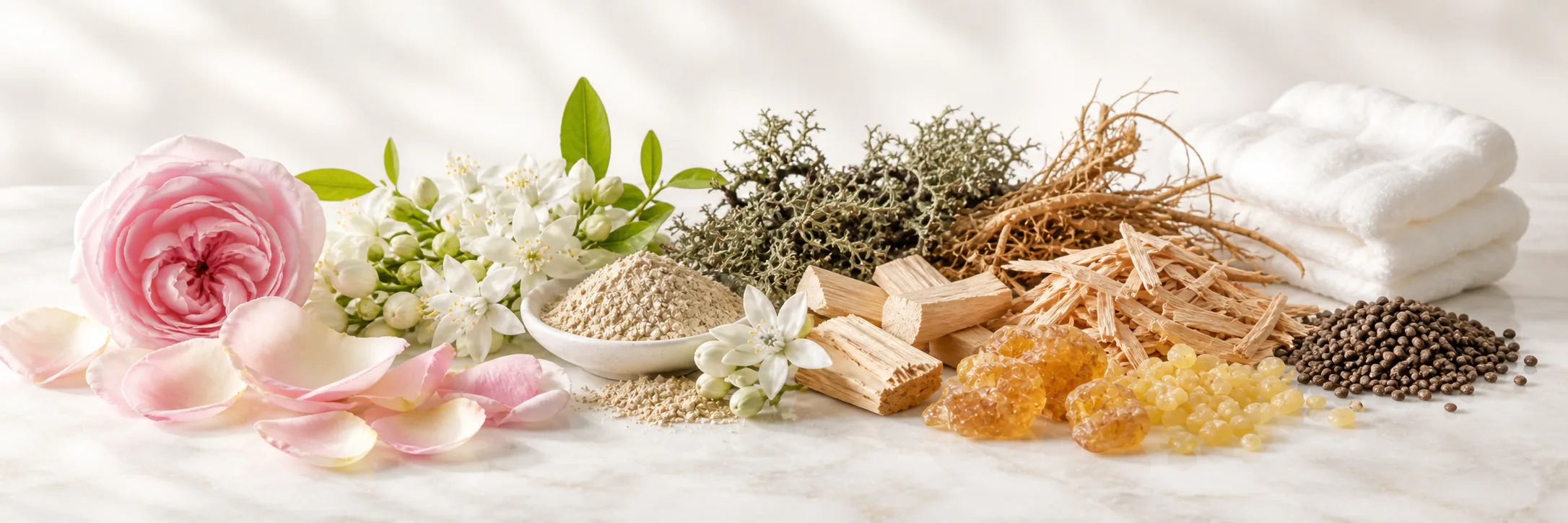
The catalog lists aldehydes, neroli and lily-of-the-valley up top; ylang-ylang, jasmine, rose and tuberose in the heart; vanilla and vetiver in the base, with powdery, soapy, white-floral and incense facets. In wear, the opening is all aldehydes - a huge, cold, shimmering, slightly camphoraceous sparkle the wearers compares to “the moment a bottle of champagne is popped.” This is the loudest phase by far. Neroli and lily-of-the-valley flicker through as bright greenish-white accents, but the aldehydes dominate so completely that the florals read as a unified cool “white haze” rather than individual notes. Tuberose surfaces a few minutes in. The heart (one to three hours) is where the white-floral bouquet warms and rounds: ylang-ylang and jasmine give a creamy, slightly indolic richness, rose adds body, and the whole becomes “cold flower” - beautiful, powdery, soapy in the luxurious sense rather than the cheap one. This is the “soft, warm” mid-stage that longtime wearers love. The aldehydes never fully leave; they keep the florals aloft and waxy. The drydown (three-plus hours) is the genuine surprise and the connoisseur’s reward: a radiating warmth of vanilla, vetiver and a brooding incense note that contrasts strikingly with the icy opening. Wearers describe it as a “luxurious skin scent,” slightly balsamic, with incense “sitting broodingly in the background.” This incense facet - strengthened in the Les Exclusifs EDT relative to vintage - is what makes No 22 read as unexpectedly unisex and keeps it from being merely a pretty floral. The signature accord is the aldehyde-over-white-florals “raspy haziness” resolving into warm vanilla-incense. It evolves meaningfully rather than staying linear: cold-bright to warm-soft.
Performance
For an aldehydic floral, performance is strong. The Les Exclusifs EDT projects heavily on application - “heavy sillage on application, evolving to become a radiant skin scent in the dry down” - with longevity that wearers rate as excellent, commonly all day on skin and longer on fabric. The vintage EDT was legendarily potent (“the sillage of an atom bomb,” per one wearer discussions vintage owner). The aldehydes make the opening bloom and broadcast in cool, dry air, which is also when the composition is most flattering. In heat the aldehydes can turn sharp. No 22 is famously skin-dependent precisely because of the aldehydes - results vary more by wearer chemistry than most fragrances, so the same bottle can read thin and soapy on one person and rich and radiant on another. Best applied modestly and allowed to develop; the drydown rewards patience. On clothing the incense-vanilla base lingers notably.
Wearing Context
No 22 is a cool-weather, transitional-season fragrance - fall, winter, and crisp spring - and works day or night, though its powdery formality skews dressy. It excels in elegant, cooler settings: it has the chic, “old-money,” dressed-up character of classic Chanel and reads as sophisticated rather than youthful despite the “brides and innocence” imagery some attach to it. The warm incense base gives it evening and cold-day staying power. It falls flat in hot, humid weather, where aldehydes go shrill, and it can feel too formal or “mature” for casual daytime or sporty contexts. Socially it is perceived as refined and classic; the incense and aldehyde combination make it genuinely wearable by men, several of whom report wearing the “feminine” scent and fielding compliments. It is not a crowd-pleasing modern crowd-magnet - it’s a statement of taste.
Comparisons & DNA
No 22’s DNA is inseparable from Chanel No 5, its 1921 elder sibling - both Ernest Beaux aldehydic florals, but No 22 pushes the aldehydes harder and is, per wearer reports, “softer” and sweeter in the body while more extreme in the sparkling top; many who find No 5 “cold and uninteresting” prefer 22. Within the Chanel canon, Bois des Iles (another Beaux Exclusif) is the warmer, sandalwood-driven cousin and Gardenia and Cuir de Russie are collection-mates from the same reformulation wave. Outside Chanel, Turin’s Perfumes: The Guide notes a kinship with Lady Stetson (Coty) as a budget aldehydic-floral in the same ballpark - a frequently repeated tip for approximating vintage 22 cheaply. Other reference aldehydics in its family tree include Lanvin Arpege, Caron Nuit de Noel (a 1922 contemporary), and First (Van Cleef & Arpels). No 22 helped define the aldehydic-floral genre that dominated 20th-century perfumery; it is an ancestor, not a descendant, and no modern “clone” attempts it because the style itself has fallen from fashion.
Reception
Among classic-Chanel devotees, No 22 inspires intense, decades-long loyalty - “my signature fragrance for 41 years,” “worn it for more than 50 years” - and is frequently called the best of Les Exclusifs by those who prefer it to No 5. The standout critical voice is **Luca Turin **, whose celebrated Perfumes: The Guide review casts it as “an exercise in heavy lifting,” likening the aldehyde overdose to a maximum-payload Antonov cargo plane: “(1) Determine the largest dose of aldehydes a human can stand without fainting. (2) Load it up with as much sweetness as the aldehydes can bear. (3) Round it off with a note of iris to make it look easy. (4) Stand back and watch the whole thing lumber off into the sky after a three-mile takeoff roll.” Bois de Jasmin reviewed it admiringly and called the reissue respectful of tradition; Now Smell This’s Angela wrote affectionately about discovering it at the counter. Polarization centers on the aldehydes (glorious vs. “too soapy and thin”), skin-dependence, and price. Common criticism on Chanel’s own listings: disappointment that current bottles don’t match decades-old memory, plus “staggering” price increases. Blind buy? Only if you already love aldehydes and ideally have smelled No 5 - otherwise sample first.
Versions & Reformulation
No 22 has a long, tangled version history. Ernest Beaux created the original in 1922 (extrait, then EDT and a now-legendary vintage Eau de Cologne). Chanel’s in-house perfumer Jacques Polge reformulated the old classics - almost certainly including No 22 - for the modern era; wearers sleuthing places this between the late 1980s and early 2000s, with the 2007 Les Exclusifs relaunch repackaging it (200 ml EDT, 15 ml crystal-flacon parfum) and, per Bois de Jasmin, giving the EDT “a stronger incense facet.” In late 2016 Chanel discontinued the Les Exclusifs EDTs and replaced them with EDP versions (the catalog’s EDT is thus the discontinued concentration). Wearers parse the concentrations finely: vintage = airy aldehydes + slight incense; Les Exclusifs EDT = airy aldehydes + more pronounced incense; EDP = waxier aldehydes (old books, beeswax) + same incense, more contemplative; Parfum/Extrait = white-floral emphasis, waxy aldehydes, least incense. The EDP is widely judged less aldehydic but still excellent and long-lasting.
Acquisition Notes
Pricing tier: luxury (Chanel Exclusifs). The line sells in large-format bottles - historically 200 ml EDT, now 200 ml EDP - plus the 15 ml crystal-flacon extrait, with travel and refill formats. As an Exclusif it is sold through Chanel boutiques, chanel.com, and Chanel counters at select department stores (Nordstrom, Bergdorf, Neiman Marcus, Saks) rather than broadly. The discontinued Les Exclusifs EDT and vintage formulations now trade on the secondary market and command rising prices; vintage EDT buyers are cautioned that aldehydic juice can turn - sealed parfum is the safer vintage bet.
Notable Facts & Lore
- The catalog credits Ernest Beaux, who created No 22 in 1922 and reportedly numbered it for its position among the sample vials he presented to Coco Chanel - the same numbering logic that named No 5.
- It was conceived as a companion to No 5, expressing what Chanel framed as simplicity, clarity and modernity, and reportedly launched to complement her “White Look.”
- On the attribution question flagged in the catalog: Chanel’s own current copy still credits only Beaux for the composition - “N22 is a fragrance born from the vision of Gabrielle Chanel and composed by perfumer Ernest Beaux, the legendary creator of N5… N22 Eau de Parfum debuted in 1922.”
- However, multiple wearer discussions and wearer accounts attribute the modern reformulation/adaptation carried into the Les Exclusifs line to Chanel in-house perfumer Jacques Polge (head perfumer from 1978), so “Ernest Beaux, 2007” is best read as “Beaux’s 1922 formula as maintained into the modern line under Polge.”
- Chanel’s own copy also describes it as “a skin scent… full of grace… (that) also bears the imprint of their audacity.”