Chanel — Coco Mademoiselle Parfum
Essence
This is the pure parfum/extrait concentration of Chanel’s mega-selling Coco Mademoiselle - the fruity-floral-patchouli “fruitchouli” that Jacques Polge built in 2001 as a cleaned-up answer to Mugler’s Angel. Where the ubiquitous EDP is bright, brash and loud, the Parfum is the connoisseur’s quiet sibling: rosier, denser, juicier and more saturated, with the sharp citrus pulled back and the white musk tucked into the background, trading the EDP’s room-filling sillage for an intimate, refined, close-to-skin richness. It is the rarest and least-encountered member of the Coco Mademoiselle family.
Scent Profile
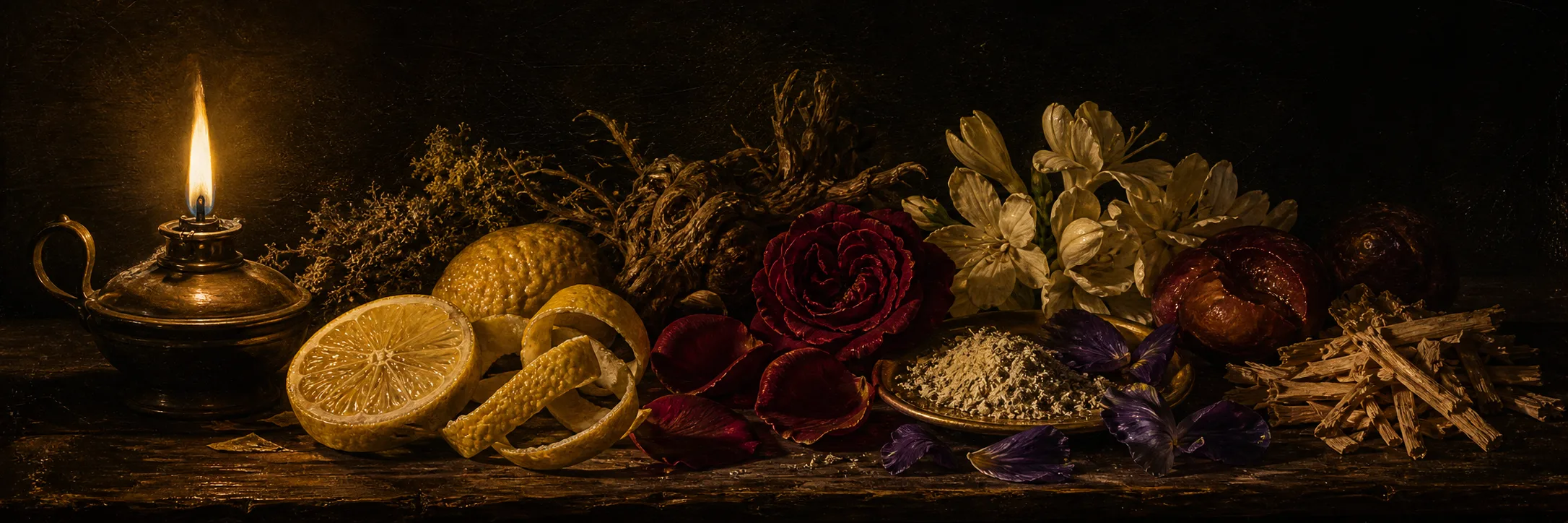
Working from the citrus-top / rose-lychee-jasmine-heart / patchouli-vanilla-musk-vetiver base, the Parfum reorders the familiar arc toward depth over sparkle. The opening still carries the recognizable orange-bergamot-grapefruit citrus, but in the extrait it is noticeably softer and less brash than the EDP’s famously stringent, almost metallic citrus blast - wearers describe it as fuller and “juicy,” more like a liqueur than the EDP’s “sugary orange juice.” Within the first 10-20 minutes the fruit (lychee reading as the signature pinkish, perfumey pop) and the rose come forward together rather than the citrus dominating. The heart (1-3 hours) most distinguishes itself: the rose dominates, lush and full, over an earthy patchouli base, with jasmine radiant but never intrusive, and balsamically sweet tonka beans dusted with vanilla (per an experienced multi-version owner in wearer discussions). Chanel’s official copy notes the parfum is enriched with accents of iris, adding a rooty, powdery facet. The drydown (3+ hours) settles into the cleaned-up, fractionated, non-herbal patchouli with tonka-vanilla warmth and vetiver, but crucially the white musk that powers the EDP and EDT here “remains subtly in the background,” giving the extrait a paradoxical lightness despite being the most concentrated form. Of the listed notes, rose, orange, lychee, patchouli, tonka and vanilla are most perceptible; jasmine and vetiver support, the musk is deliberately quiet. It evolves slowly and “teases layer by layer,” but is recognizably Coco Mademoiselle, just denser and rosier. The signature accord remains fruity-patchouli, here with the rose pushed up and the brightness pulled down.
Performance
The Parfum trades projection for refinement. Where the EDP is a notorious sillage monster lasting 10+ hours with a loud, room-filling trail, the Parfum’s projection is “elegantly understated” - enough for intimate distance but with a deliberately smaller scent bubble that wearers find “easy to wear.” Longevity in the extrait is more moderate than the EDP: one detailed wearer reports it noticeable for the first 10-15 minutes, then weakening to a close-to-skin scent, with overall longevity around eight hours; others find it lasts well but stays quiet. A minority view (wearer discussions) holds the pure parfum is “very much the same strength” as the EDP and differs mainly in its slower development. On clothing it persists longer than on skin. Behavior tracks the EDP: it can turn powdery and heavy in heat, and the patchouli reads best in cool weather. Best application: dab sparingly to pulse points given the splash format and high concentration - a little goes a long way.
Wearing Context
Coco Mademoiselle as a whole is a versatile, all-occasion, day-to-night workhorse, and the Parfum inherits that flexibility while skewing toward intimate, dressed-up and cooler-weather wear thanks to its richness and rosier depth. It suits formal evenings, special occasions and “worn-just-for-myself” moments - wearers frame the extrait explicitly as a personal-pleasure, small-dose luxury rather than a broadcast scent. Its smaller projection makes it more office- and close-quarters-friendly than the EDP, whose supernatural sillage famously announces itself across elevators and cocktail parties. Where it shines: anyone who loves Coco Mademoiselle’s DNA but finds the EDP too sharp, loud or synthetic in the citrus. Where it falls flat: anyone seeking the signature loud trail will find it too reserved, and patchouli- or sweet-floral-averse wearers will dislike it as much as the pillar. Social-perception skew: the line reads polished, “put-together,” somewhat mature modern-classic; the Parfum amplifies the elegance and dials down the teenage-ubiquity association.
Comparisons & DNA
Coco Mademoiselle is the foundational fruitchouli, and its lineage is explicit: Luca Turin’s Guide frames it as Chanel’s cleaned-up Angel (Mugler) - “turning the dial from heavy, sour and syrupy to luminous, pretty, and girly.” Cafleurebon’s Sergey Borisov calls it “the first fruitchouli,” art-directed to channel “the Mugler unmistakable glossy cotton-candy patchouli trail in the black’n white classy rigueur of the Chanel DNA,” and credits it as a direct reference point for Narciso Rodriguez for Her, Lanvin Rumeur (Francis Kurkdjian) and the original Miss Dior Cherie (Christine Nagel). Within Chanel, the Parfum is closest to its own EDP - same fragrance, denser/rosier/quieter - and shares family resemblance with Coco Noir (darker, woodier) and, per multiple wearers, an elusive thread of Coromandel’s patchouli in the base. Coco Mademoiselle Intense (2018) is the sweeter, ambery flanker that some prefer to all others. For the extrait specifically there are no genuine clones - the broader Coco Mademoiselle has been chased by countless designer and drugstore fruitchoulis (Yves Rocher So Elixir, etc.), but wearers consistently report no dupe captures the quality, and the splash-only extrait is too rarefied to have inspired direct copies.
Reception
Wearer response treats the Parfum as a hidden, hard-to-find gem for devotees rather than a widely discussed object - its listing is so contaminated with misfiled EDP/EDT reviews that users repeatedly plead for people to keep it on-topic, signaling how few have the actual extrait. Among those who do, consensus in wearer discussions is strongly positive and specific: it is “the purest and fullest of all Mademoiselles,” “significantly fuller and more saturated… compared to the EDP,” “so incredibly dense and full, heavy yet light,” and the rose-dominant, musk-quiet character is praised as more grown-up and delicate than the bombastic EDP. The recurring criticism is performance relative to expectation - buyers expecting an extrait to out-project the EDP are surprised by its understated sillage and roughly 8-hour longevity, plus the high splash-bottle price and awkward dosing. No dedicated critic review of the pure parfum surfaced; all named-critic coverage (Now Smell This’s Angela, Bois de Jasmin, Persolaise, Cafleurebon) targets the EDP, EDT, original 2001 release, or the L’Eau Privee flanker. Turin reviewed Coco Mademoiselle in the Guide with grudging respect while sniffily concluding “Mercifully, this style is on its way out” - a prediction history judged spectacularly wrong, as the line outsold even No. 5 and defined two decades of mainstream perfumery. Blind buy? Only for confirmed Coco Mademoiselle lovers who specifically want a quieter, rosier, more refined version and accept boutique-level pricing and modest projection; everyone else should start with the far cheaper, easier EDP.
Versions & Reformulation
The Coco Mademoiselle family runs EDT (2002, lightest/sharpest/most citrus-forward, ~6-8h), EDP (2001, the loud, patchouli-and-musk pillar, 10+h and a sillage monster), Parfum/extrait (the densest, rosiest, quietest, splash format), the 2012 L’Extrait summer flanker (a separate, lighter product - not to be confused with the pure parfum), Coco Mademoiselle Intense (2018, sweet/ambery), and L’Eau Privee (2020, sheer bedtime version). A monumental limited-edition Grand Extrait flacon (7.5 fl oz, sealed by baudruchage, ~$17,000) also exists. The broader line has drawn persistent wearers reformulation complaints - longtime wearers report newer batches smelling weaker or “completely different” - and the everyday pure parfum has itself been reported as discontinued by some owners. Note that the EDT and EDP are genuinely different compositions, not just concentration steps.
Acquisition Notes
The Parfum sits in Chanel’s luxury tier: roughly $600 for 7.5ml online per wearer reports, in splash/dab format (7.5ml, 15ml, and a rare 30ml), in the octagonal faceted clear-cap flacon - far pricier per ml than the widely discounted EDP. It is genuinely hard to find: wearers note you can easily source Coco or Allure parfum but “for some reason this one is so hard to find,” and it is effectively boutique/online-only with thinning availability. Decants are the realistic entry point - MicroPerfumes and the split wearers sometimes carry the parfum, though stock is inconsistent. Avoid auction-site bargains without provenance.
Notable Facts & Lore
- Coco Mademoiselle was created in 2001 to rejuvenate the aging Coco (1984) and keep the name on shelves for a younger consumer; its runaway success genuinely surprised Chanel - Women’s Wear Daily later reported it took in Coco Mademoiselle was created in 2001 to rejuvenate the aging Coco (1984) and keep the name on shelves for a younger consumer; its runaway success genuinely surprised Chanel - Women’s Wear Daily later reported it took in $21 million in its first year, swept the FiFi for Prestige Fragrance across all FiFi countries, and won European Star of the Year. It went on to outsell even Chanel No. 5 in the US for stretches and, per Cafleurebon, effectively birthed the “fruitchouli” genre that flooded perfumery for the next 20 years. The Keira Knightley campaigns shot by Karl Lagerfeld - channeling Coco Chanel’s garconne style - cemented it as a cultural touchstone. The pure parfum is the insider’s footnote to this blockbuster: the form devotees seek out precisely because it strips away the qualities (loud citrus, blasting musk) that made the pillar both famous and, to some, fatiguing.1 million in its first year, swept the FiFi for Prestige Fragrance across all FiFi countries, and won European Star of the Year.
- It went on to outsell even Chanel No.
- 5 in the US for stretches and, per Cafleurebon, effectively birthed the “fruitchouli” genre that flooded perfumery for the next 20 years.
- The Keira Knightley campaigns shot by Karl Lagerfeld - channeling Coco Chanel’s garconne style - cemented it as a cultural touchstone.
- The pure parfum is the insider’s footnote to this blockbuster: the form devotees seek out precisely because it strips away the qualities (loud citrus, blasting musk) that made the pillar both famous and, to some, fatiguing.