Chanel — Coromandel Parfum
Essence
Coromandel Parfum is Olivier Polge’s 2019 extrait-strength reinterpretation of one of the most beloved modern Chanels - the “white-chocolate patchouli” from Les Exclusifs, descended from the Sheldrake/Polge original of 2007. It takes the gourmand-patchouli-incense DNA and makes it darker, smokier, warmer and more resinous: the sweetness pulled back, the frankincense and labdanum pushed up, the patchouli rounded and deepened. Widely judged a worthy successor to the cult original EDT and a redemption of the divisive 2016 EDP, it is unisex, opulent, and - like much of the extrait range - now discontinued.
Scent Profile
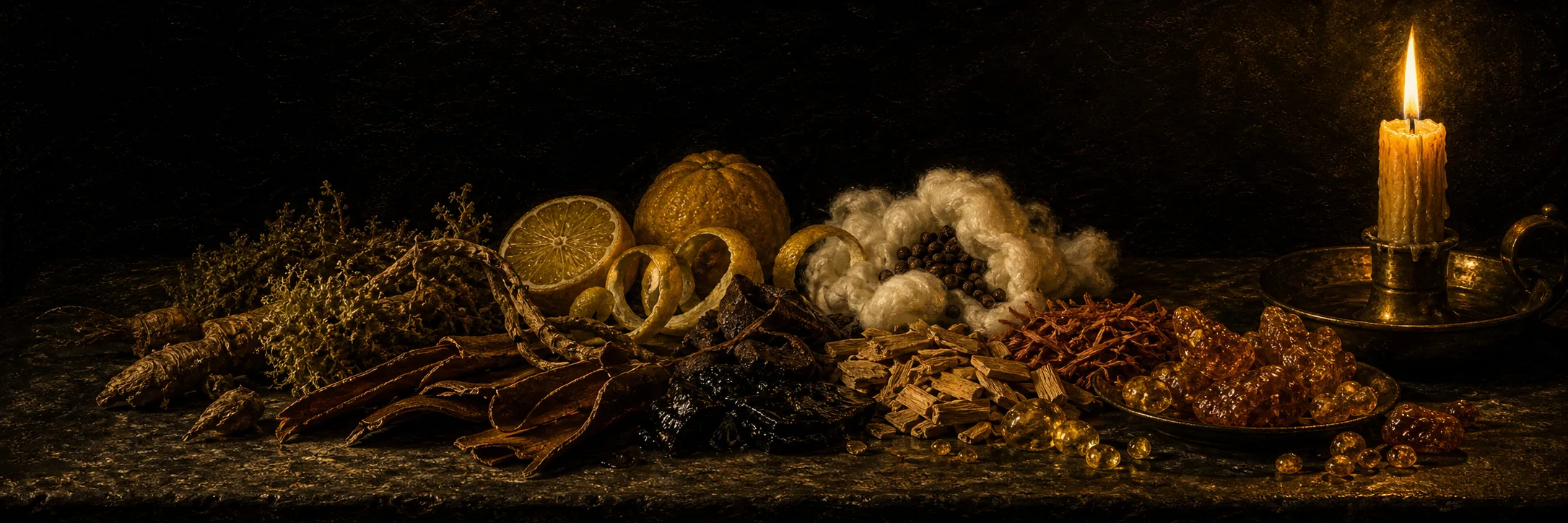
Coromandel’s bones are patchouli, frankincense, benzoin, labdanum, amber, leather, woods and musk, and the Parfum reorders them toward depth and smoke. The opening still carries Coromandel’s signature contrast - a bright, slightly aldehydic, citrus-and-neroli sparkle (bitter orange) over a camphoraceous, terpene-rich patchouli - but in the extrait the citrus is strengthened as a light-dark counterpoint while the base is simultaneously darkened. Colognoisseur’s Mark Behnke describes the opening as “a smokier version of the jasmine-pine-patchouli trio of the original,” with smoke coming “through frankincense and labdanum,” and the original’s sweetness “pulled back so the resins can warm the top notes.” The heart (1-3 hours) is the famous Coromandel patchouli - not a fusty head-shop patchouli but a smooth, rounded, faintly chocolatey one - laced with orris (a powdery, lipstick-like, leathery facet), rose and jasmine as delicate brushstrokes. The Parfum brings out the chocolate/cocoa nuance and a “more prominent accord of resins & leathery orris.” The drydown (3+ hours) is the payoff: an intensely ambery, smoky-resinous base of benzoin, labdanum and frankincense over the patchouli, warmer and more intimate than the EDP, with a tiny animalic edge some compare to Bois des Iles parfum, and the white-chocolate-patchouli sweetness still present but with more depth and less powder. Of the listed accords, patchouli, frankincense/incense, benzoin, labdanum and amber are clearly perceptible; the leather and woods are textural; musk supports. The Parfum is the smokiest and most labdanum-driven of the three concentrations. Coromandel is famously slow and near-linear in its grand arc - Kafkaesque reports the heart stage taking many hours to fully turn on the extrait. The signature accord is unmistakable: smoky incense and white-chocolate-tinged patchouli wrapped in warm amber.
Performance
Coromandel Parfum is a strong but refined performer. Projection is moderate to strong - notably, the extrait projects less than the louder 2016 EDP but compensates with a richer, more seductive trail; one wearer summarizes “more smoke… doesn’t project as much as the EDP, but leaves a seductive scent trail and lasts all day.” Sillage is elegant rather than aggressive. Longevity is excellent, as expected of an oriental extrait: wearers and reviewers report all-day-plus wear, with Kafkaesque describing a drydown lasting an “inordinate amount of time,” largely unchanged into the 18th hour on absorbent skin - and the original/EDP versions commonly cited at 12+ hours. The resin-and-patchouli base drives the tenacity. Behavior: it is a cool-weather powerhouse that blooms in autumn/winter, while the original notably “blossomed” in extreme dry desert heat (turning rosier and more floral), so it is more heat-tolerant than most orientals though it can read heavier in humidity. On clothing it persists for days. Best application: a small dab/spray to pulse points is ample given the concentration and tenacity; over-application risks an overwhelming density some find headache-inducing.
Wearing Context
Coromandel Parfum is a cool-weather, evening and special-occasion fragrance first - a rich, ambery statement oriental for fall and winter, formal wear and “dressing up,” frequently likened in spirit to Shalimar’s diva register. It shines as a confident, opulent signature for someone who wants a sophisticated, slightly dressy patchouli-amber; it is decidedly not a casual daytime or hot-summer office scent in the way its softer Les Exclusifs siblings are, though the original’s surprising desert-heat performance gives it more range than expected. Where it falls flat: anyone who dislikes patchouli, incense or powdery vanilla will bounce off it, and it can read as “too strong” or even “matronly” to some (a charge fans vigorously reject as “cozy” and “sophisticated” instead). It is genuinely unisex and widely worn by men despite the feminine market classification - the smoke and spice offset the powder enough that male wearers report constant compliments. Social-perception skew: it reads expensive, refined and “grown,” a connoisseur’s Chanel rather than a crowd-pleasing designer scent.
Comparisons & DNA
Coromandel’s lineage runs straight through Christopher Sheldrake’s patchouli work: it is the perennial point of comparison to Serge Lutens Borneo 1834 (also Sheldrake), and the two are eternally discussed together. Bois de Jasmin’s Victoria Frolova placed the original “someplace between the fun fair exuberance of Thierry Mugler Angel and the dusky bitterness of Serge Lutens Borneo 1834.” The consensus distinction (Frolova, Kafkaesque, wearer discussions): Borneo is darker, drier, earthier, more about unsweetened cocoa powder and stays close to the skin; Coromandel is sweeter, lighter, louder, more floral and built on white chocolate rather than cocoa - Frolova’s framing casts Borneo as “a nostalgia-ridden poet” and Coromandel as “a chirpy tween… shopping,” cousins who “have nothing much in common besides similar noses.” Within Chanel, Sycomore is repeatedly called “the black version of Coromandel” (Kafkaesque) - same chocolate-patchouli opening, but dry, smoky and vetiver-driven without the vanilla-benzoin-powder heart. Coco (Chanel) shares the velvety oriental base in a more ambery direction. Cross-house, wearers liken it to Frederic Malle Portrait of a Lady and Musc Ravageur (it was pitched to one as an “affordable alternative,” which Coromandel’s price ironically isn’t), Sonoma Scent Studio Champagne de Bois (a non-Sheldrake near-relative), and Davidoff Zino (a budget rich-patchouli echo). It helped define the elegant-gourmand-patchouli niche; its direct relatives are artisanal/niche, and no convincing cheap designer clone of the Parfum specifically exists - sampling, not duping, is the route in.
Reception
Coromandel is one of the most critically adored modern Chanels, and the Parfum extends that adoration. Across wearer discussions and wearer discussions it is repeatedly called a “masterpiece,” “the best patchouli Chanel has released,” and the version several devotees prefer above all others. The Parfum specifically is lauded as “smokier, richer, and darker” with “less of the beautiful damp earth patchouli” but more incense, and as the form that “highlights the sensuality and touch of skank of real patchouli.” critics are strongly in its corner: Persolaise ranked the original #5 in his Best of Chanel, calling it “vivid, mouth-watering white chocolate… one of the most elegant patchoulis committed to a bottle,” and in his extrait video noted how much “dirt it was managing to smuggle under the banner of the double-C logo.” Colognoisseur’s Mark Behnke judged the Parfum “a compelling re-telling of the original… I like it as much as the original,” praising Olivier Polge for making it “warmer and more intimate.” Polarization axes: patchouli divisiveness, the steep price, the “is it groundbreaking or just immaculate?” debate, and - crucially for this concentration - the EDT-vs-EDP-vs-Parfum wars, where many feel the 2016 EDP lost the original EDT’s vibrancy and turned “humid/attic/old-lady,” while the 2019 Parfum is widely felt to recover much of that magic. Blind buy? Not a typical blind buy given the price and patchouli divisiveness - but Coromandel inspires such devotion that some wearers say to own one “out of pure respect”; sampling first remains the wise counsel.
Versions & Reformulation
Coromandel has three concentrations: the original 2007 EDT (Jacques Polge & Christopher Sheldrake, with Olivier Polge assisting), beloved as the most vibrant and dynamic, now discontinued and hard to find even secondhand; the 2016 EDP (a more concentrated reformulation Jacques Polge oversaw, widely felt to be sweeter/heavier and, to detractors, to have “lost a touch of its vibrancy” or turned damp/old-fashioned on the dry-down); and this 2019 Parfum/extrait by Olivier Polge. Per Chanel, the Parfum keeps the basic formula but features “a heightened musk note for added warmth and fullness” plus “swirls of frankincense and Andalusian labdanum” for “a darker ambery note with smoky accents”; Chanel publishes no full note list for it. Kafkaesque’s analysis credits the Parfum with restoring a strong bergamot opening and clarifying the frankincense/benzoin, hitting “that sweet spot in the same way that the original EDT did” - and rates it far above the EDP. wearer verdict: EDP = more amber; EDT = more neroli; Parfum = more smoke and a touch animalic. The Parfum is now reported discontinued, consistent with Chanel winding down the Les Exclusifs extrait line.
Acquisition Notes
Coromandel sits in Chanel’s ultra-luxury Les Exclusifs tier - historically the EDT/EDP ran $110 for 75ml and ~$210 for 200ml; the Parfum/extrait came in smaller formats (including 0.5 fl oz and 15ml) in the faceted flacon sealed by baudruchage (a fine membrane held by two rows of pearl-cotton thread and a black wax stamp). As a discontinued extrait it now commands premium secondhand prices. Authentic channels: remaining Chanel boutique/department stock, chanel.com while listed, and the decant/split wearers. Sampling the Parfum specifically is notoriously hard - Kafkaesque notes Chanel boutiques pre-make EDP samples but guard the extraits jealously, advising you bring empty vials; there are no factory-made parfum testers.
Notable Facts & Lore
- Coromandel is named for the lacquered Chinese folding screens Coco Chanel adored - she reportedly said she “nearly fainted with joy” on first seeing one and surrounded herself with them in her 31 rue Cambon apartment; the perfume translates their “blend of opulence and austerity, of dark sheen and bright gold embellishments” into scent.
- Olivier Polge has spoken about the original’s place in the collection, explaining that “when you create a perfume called Coromandel, you weave a thread with the decoration of Gabrielle Chanel’s flat… where you find her Coromandel folding screens that evoke a certain exoticism,” and that each Exclusif carries “a fairly dense style, a particular texture, sometimes even darker tones.”
- For this Parfum specifically, Chanel framed Polge’s intent as heightening the heart “to give the fragrance even greater warmth and fullness” with frankincense and Andalusian labdanum lending “a noble quality.”
- Among enthusiasts Coromandel is simply “the one” Chanel patchouli - the white-chocolate-patchouli benchmark against which the genre is measured.