Chanel — Les Exclusifs de Chanel Eau de Cologne
Essence
Eau de Cologne is Chanel’s luxury reinterpretation of the classic 18th-century eau de cologne form, launched in 2007 as one of the original six Les Exclusifs de Chanel by Jacques Polge and Christopher Sheldrake. It’s a crisp, radiant lemon-bergamot citrus that opens bright and sharp, blooms into a beautiful Grasse neroli-petitgrain heart, and settles on a soft, expensive Chanel musk-tonka base. Luca Turin singled it out at launch as an Eau de Cologne that “goes straight to the top of its class.” Universally praised for beauty, universally dinged for short longevity - by design.
Scent Profile
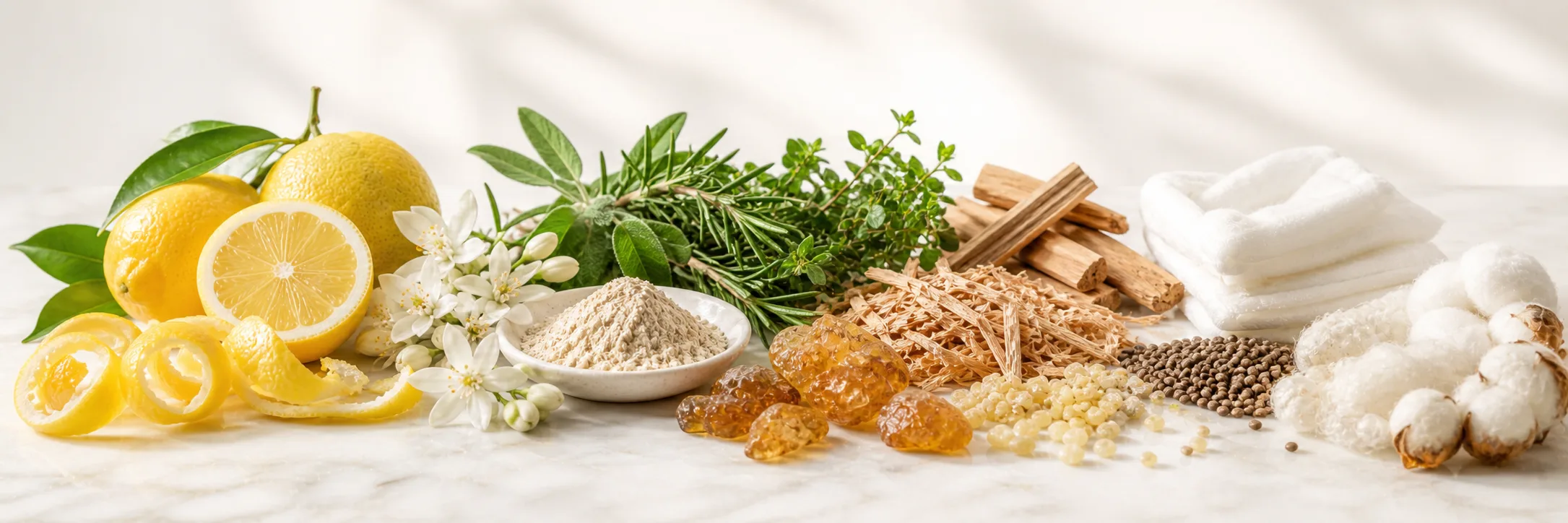
The catalog lists lemon, bergamot, citrus and green up top; neroli, petitgrain and spicy notes in the heart; musk and tonka bean in the base. This is a textbook deluxe cologne structure, and it wears largely as written. The opening (first 10-20 minutes) is a sharp, nose-tingling lemon - one reviewer notes “sharp nose tingling lemon citrus with hints of supporting lime” - alongside bright bergamot. It’s loud, crisp and true, and several reviewers find a hard lemon-grapefruit “chassis” shared with Allure Homme Sport Cologne (also a 2007 Polge cologne). What’s subtle early is the green facet and the first hints of orange-blossom. The heart (roughly the first hour) shifts to the floral interior that reviewers consider the real magic: a clean, fresh neroli and green petitgrain tandem - “a glowing neroli,” “exquisite notes of neroli,” “clean fresh orange flower and green petitgrain.” This is the dominant mid-stage character and the part most reviewers fall for. One reviewer described a notable peppered-rose nuance that “becomes more pronounced over time, rendering it more perfume-y and less cologne-y,” lending depth uncommon in colognes. The “spicy” listed note manifests as a faint, refined warmth rather than overt spice. The drydown (such as it is, 2-3+ hours) is a soft, powdery, slightly sweet Chanel musk with tonka - what wearer reports call “that distinctively expensive Chanel musk” and “a barely detectable creamy base.” Multiple reviewers note a gentle drift toward the powdery/feminine in the base, where the citrus glass ceiling finally breaks. It’s mostly linear - citrus to neroli to musk - and the defining signature accord is the luminous lemon-neroli over clean musk: a polished, sunlit, “expensive clean” citrus. The honest caveat: the whole thing is faint and fleeting; one reviewer called it “the worst performer of the exclusifs line for sure.”
Performance
Performance is the well-known weakness, and it’s intrinsic to the genre rather than a flaw. Projection is light-to-moderate and intimate after the opening burst - a refreshing splash rather than a statement. Sillage is modest. Longevity is short: wearers report figures from as little as 15 minutes to a couple of hours on skin, with many landing around 2 hours; one frustrated reviewer said “it smells only for 15 minutes on my skin.” The genre’s traditional answer - apply generously and often - is exactly what reviewers recommend, with the 200 ml (and the unusually large 400 ml) bottle existing precisely so you can splash liberally. On clothing and hair it lingers somewhat longer than on skin. Heat and humidity flash off the citrus quickly; in cool, dry conditions the neroli heart holds a bit better. Best application strategy is to over-apply relative to a modern EDP, reapply through the day, and treat it as an “olfactory espresso” first thing after a shower - as one devoted reviewer put it, “I love a spritz of it first thing out of the shower, like an olfactory espresso.” Layering over a matching unscented or lightly scented base (some users pair it over Chanel body products) extends it.
Wearing Context
This is a hot-weather, daytime, casual-to-smart fragrance - the archetypal summer cologne. Reviewers reach for it for warm days, beach trips, post-shower freshening and clean everyday wear. It shines in heat where its bright citrus reads as crisp and revivifying, and in any context calling for understated, unmistakably-luxurious cleanliness - “smells expensive” without shouting. It’s genuinely unisex: classified feminine by wearer discussions but worn happily by men, with one reviewer noting it conjures “Savile Row shirts and high class tailoring” for the first few hours before the powdery musk swerves slightly feminine. Where it falls flat: cold weather (the citrus vanishes), formal evening occasions wanting projection and presence, and anyone seeking value-for-longevity - at Chanel’s price the short life is the chief complaint. It’s a fragrance you wear for your own pleasure, not to project a wake across a room.
Comparisons & DNA
Eau de Cologne descends from the traditional 4711-style eau de cologne, elevated with Chanel’s Grasse materials and a deluxe musk base. Its nearest sibling is Chanel Allure Homme Sport Cologne (2007), which a reviewer memorably framed via a car analogy: both are built on “the same chassis of a hard and bright lemon & grapefruit accord,” with Allure the “entry level runaround made to a strict budget” and the Exclusif “the top of the range model” with bitter orange, neroli, Grasse jasmine/rose and “decent musk.” The most-cited upgrade alternative is Frederic Malle Bigarade Concentree (Jean-Claude Ellena) - described by a reviewer as “an expensive, but longer-lasting alternative… with a gorgeous bitter orange opening, and rose in place of neroli.” Reviewers also place it near Maison Francis Kurkdjian colognes (“clean, well-blended cologne reminiscent of MFK”), the Comme des Garcons cologne series, Dior Cologne Blanche, and classic 4711. For the neroli/orange-blossom heart specifically, Hermes Eau de Neroli Dore, Atelier Cologne neroli/citrus offerings and Tom Ford Neroli Portofino (much louder, longer-lasting, more expensive) are the obvious cross-shops - TF Neroli Portofino being the “performance” answer to the same idea. As designer/cheaper alternatives, Allure Homme Sport Cologne is effectively the in-house budget version. Within Les Exclusifs, it’s the lightest and most evanescent of the lineup. No true “clone” is needed - affordable quality colognes (4711, the CdG series) deliver the genre, if not the specific Chanel neroli polish.
Reception
This is one of the most critically beloved colognes in the modern luxury space, with remarkably consistent praise tempered by one consistent complaint. The headline endorsement is Luca Turin’s, who at the Les Exclusifs launch wrote that the six “permanently change the landscape of perfumery by proving that there is, after all, a modern Grand Manner,” singling out among them “an Eau de Cologne that goes straight to the top of its class.” (Note: this “top of its class” line is from Turin’s 2007 launch column - reprinted via The Perfume Society - rather than a confirmed star-rated entry in Perfumes: The A-Z Guide; treat it as his launch verdict, not a verified book rating.) wearer reports in wearer discussions echoes it: “Possibly the best eau de cologne in the market today,” “the most spectacular Eau de Cologne I have ever smelled,” “the finest EdC I’ve smelled.” Common praise: impeccable blending, classy and balanced, a “lemon top note to die for,” and a beautiful neroli. The near-universal criticism is longevity and, relatedly, value - “Considering the high price-point of Chanel’s Exclusifs series, Chanel’s Eau de Cologne is too expensive for me to consider owning it.” Polarization runs along the value/performance axis rather than the scent itself: almost nobody dislikes how it smells; many balk at paying Chanel Exclusifs money for two hours of wear. Blind-buy verdict: scent-wise a very safe blind buy if you understand and accept cologne-genre longevity; sample first only if short life would frustrate you. One reviewer’s practical advice: buy the large bottle and “spritz yourself liberally.”
Versions & Reformulation
Originally released in Eau de Toilette concentration, like all the 2007 Les Exclusifs. Around 2016 Chanel reformulated/relaunched the Les Exclusifs line into Eau de Parfum strength, “elevating” several scents from EDT to slightly tweaked parfums. There was genuine wearer alarm at the time: a Chanel SA was reported in wearer discussions as saying “Eau de Cologne will be discontinued entirely” during the transition. That did not come to pass - Eau de Cologne survived the EDP-era reformulation and remains in production and on sale as of 2025-2026 (wearer reports lists it as “still in production”). In practice the difference an EDP-strength reading would make is modest given the genre; it remains a light, citrus-forward cologne in feel regardless of the concentration label. Sizes: the standard Les Exclusifs 200 ml, and Eau de Cologne has been noted as unusual within the line for also being offered in a large 400 ml format (older listings cite 200 and 400 ml). Vintage EDT vs. current: longtime users sometimes report the older formulations as marginally richer, a complaint common across reformulated Chanels, but Eau de Cologne is less affected than the chypre-dependent Exclusifs (e.g., 31 Rue Cambon, Coromandel) whose oakmoss faced restriction.
Acquisition Notes
Pricing tier: luxury (Chanel Les Exclusifs). It’s a boutique-exclusive line: sold through Chanel boutiques, chanel.com, and high-end department stores (historically Bergdorf Goodman, Harrods, Selfridges), not the general designer-fragrance discount channel. Bottle sizes: 200 ml is standard, with the notable 400 ml option for this particular scent. The decant ecosystem is robust because the line is expensive and boutique-restricted - Surrender to Chance, Scent Split, MicroPerfumes and similar carry Les Exclusifs decants, and decanting is the wearers-recommended way to try before committing (Luca Turin’s own circle joked at launch that “decants and splits will be the way to go with these”).
Notable Facts & Lore
- Eau de Cologne is Chanel’s homage to a form Gabrielle “Coco” Chanel herself embraced: Chanel’s own materials note she offered an eau de cologne in her 1929 catalogue, splashing the light, refreshing concentration onto the skin in a sportier, more modern register than the heady perfumes of the era - fitting for a woman who “made sport and toned bodies more fashionable.”
- The 2007 launch of Les Exclusifs as a whole is a landmark moment in perfume criticism: Luca Turin’s rapturous pre-launch reaction - describing opening an “embarrassingly luxurious” package from Chanel and his mood going “from overcast to what aviators call ‘severe clear’” - became one of the most-quoted episodes in modern fragrance writing, and the line’s “best chypre in 30 years” hype (aimed at Coromandel/31 Rue Cambon) drew enthusiasts en masse.
- The collection is built as a set of “tributes to the places, people and symbols” of Chanel’s history (Coromandel, No.
- 18, 28 La Pausa, Bel Respiro all reference Chanel biography); Eau de Cologne’s tribute is to the genre itself and to Coco’s own early embrace of cologne.
- It remains the lightest, most classical, and arguably most “honest” entry in an otherwise grand collection.