Chanel — Cristalle Eau Verte Eau de Parfum
Essence
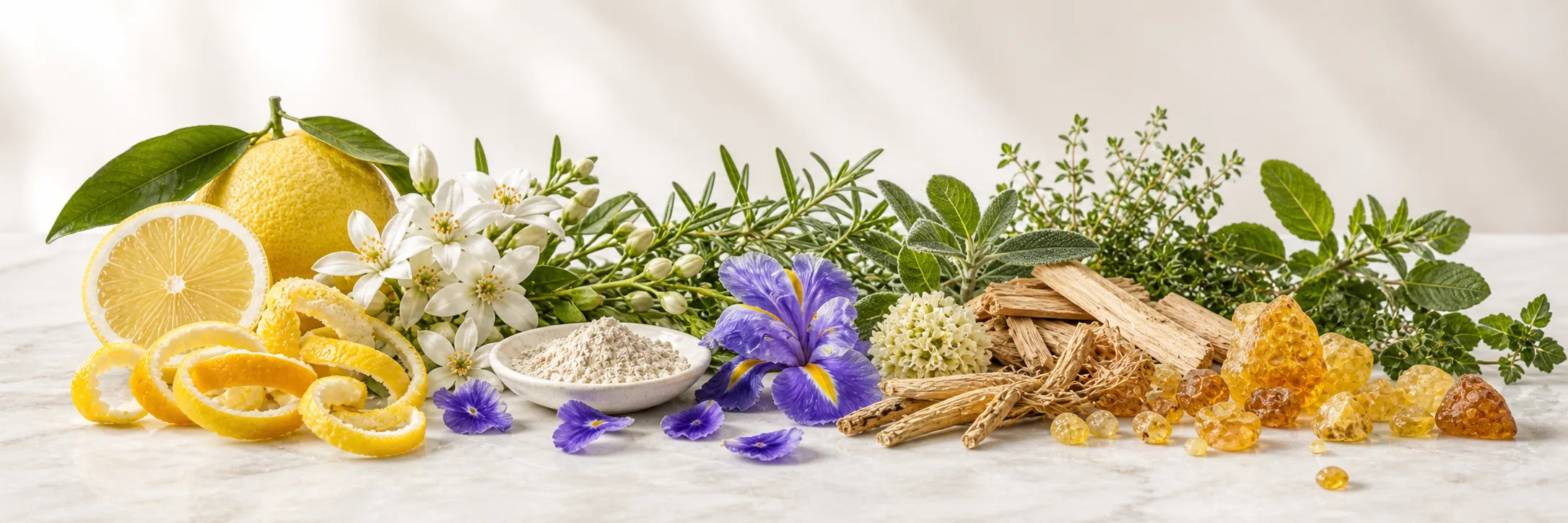
Cristalle Eau Verte Eau de Parfum (2023) is Olivier Polge’s reworking of the 2009 Jacques Polge Eau Verte - itself a magnolia-citrus offshoot of the 1974 Cristalle green chypre. It is a transparent, lemon-forward green floral built around a creamy magnolia accord, lighter and more “fresh-water” than the chypre that spawned it. The 2023 EDP nominally raises concentration but in wear stays close to the skin: a sparkling Sicilian-lemon opening melting into soft jasmine and magnolia. Crisp, elegant, springtime-coded, and conspicuously discreet for a Chanel.
Scent Profile
The opening is the loudest and best part: a bright, zesty hit of lemon and bergamot reading like “a Tanqueray gin & tonic with a dozen limes,” sharp and effervescent, threaded with a thin galbanum-adjacent green that snaps rather than bites. Within the first ten minutes the citrus is the headline; the green is a cool draft behind it, and a faint soapy cleanliness sits underneath. This is the citrus-green signature accord that defines the fragrance. Into the heart (roughly the first one to three hours), the lemon recedes and the magnolia accord moves forward - soft, slightly creamy, faintly waxy, “the perfect nurse, slim and cool and soothing,” to borrow a critic’s phrase. The jasmine is present but tamed: clean, non-indolic, more a luminous floral wash than a distinct white-flower statement. Of the listed notes, citrus and magnolia are the most perceptible; the jasmine is real but submerged into the magnolia’s creaminess, and the “green” reads as abstract freshness rather than the herbaceous galbanum of the original Cristalle. Many wearers report it leaning more citrus than floral throughout. The drydown (three hours-plus) is the weak point by consensus - a soft, slightly powdery, musky-floral skin scent with a barely-there woody underpinning. It does not develop the mossy, sueded chypre base of the 1974 EDT; reviewers note that “once in a while I get a whiff of something that makes me think of stale water from a vase.” It is essentially linear with a gentle citrus-to-floral fade rather than a true evolution. The character is a cool, well-mannered freshness - “smells like verbena mist,” as one reviewer put it - that prioritizes transparency over depth.
Performance
Performance is the recurring complaint. Projection is light to moderate - a polite arm’s-length bubble in the first hour, collapsing to a skin scent within two to three. Sillage is modest; a few wearers report it radiating more than expected from a single spray, but the dominant verdict is quiet. Longevity on skin runs roughly four to six hours at best, with many reporting two to three and the need to “bathe in it and reapply throughout the day.” Longevity on clothing is markedly better - multiple users report smelling it on fabric for a day or more. It performs best in heat and humidity, where the citrus lifts and the freshness reads as a “heat beater”; in cold or dry air it can feel thin and disappear quickly. Best strategy: apply generously (this is one to over-spray), favor clothing/scarf application for tenacity, and treat it as a warm-weather refresher rather than an all-day anchor. Note the lineage caveat: the 2009 EDT Concentree had a slightly metallic edge and comparable-to-better longevity; the 2023 EDP is described as smoother and softer but, paradoxically, often no longer-lasting.
Wearing Context
This is a daytime, warm-season fragrance: late spring and summer, mid-morning through afternoon. It shines in office settings, daytime errands, garden lunches, hot-weather travel - anywhere a clean, expensive-smelling, inoffensive freshness is an asset. wearer reports skews it slightly older and “country club”: “a country club female soap, exclusive to only the very elite upper class… white tennis skirt.” That said, several wearers call it perfectly unisex, and the citrus opening reads ageless. It falls flat in cold weather and at night, and it is wrong for any occasion needing presence, sensuality, or projection - it is too quiet for evening or romantic settings, and too simple to carry a formal event on its own. Its social-perception skew is “discreet good taste” rather than seductive or attention-getting.
Comparisons & DNA
Within the Chanel line, the direct comparisons are instructive. Cristalle EDT (1974, Henri Robert) is the ancestor - sharper, colder, mossier, a true green chypre; Eau Verte is “joyful” where Cristalle is “melancholy.” Cristalle EDP (1993/2023, Polge) is fruitier and more honeysuckle/peach-laced. The Eau Verte is to Cristalle roughly what No. 5 L’Eau is to No. 5 - a brightened, lightened, more crowd-friendly reading; critics explicitly drew the Eau Premiere parallel. Chanel No. 19 EDT is drier, greener, and far more tenacious. Chance Eau Fraiche is a useful designer-adjacent comparison: similar fresh idiom, “more mature” magnolia in the Eau Verte. Outside Chanel, reviewers repeatedly cite Guy Laroche Fidji (nostalgic green floral), Elizabeth Arden Green Tea, Versace Versense, and Bvlgari Omnia Green Jade as the “green-fresh-crisp” family this belongs to; Now Smell This explicitly grouped the 2009 with Versense and Omnia Green Jade. For magnolia specifically, Dior J’Adore L’Eau is a citrus-magnolia cousin. There is no true clone - it’s a designer green floral, but you can find “a lot like it for a lot less” in the broad fresh-citrus category. Lineage: descended from the 1974 Cristalle chypre; part of the trend of brightened-up reissues of classics aimed at younger buyers.
Reception
Dedicated coverage of the 2023 EDP is thin: editorial coverage by Elena Knezevic is the main piece, framing Olivier Polge as having “pulled down the dusty curtain and let the sunlight in” and stirred up “the antisocial Cristalle club.” Critics (Now Smell This, Persolaise, the old Perfume Posse) reviewed the 2009 EDT and the 1974/1993 line at length, so reception below blends the documented 2009 critical record with 2023 wearer response, kept distinct. On the 2009, Now Smell This found it “quite nice” but synthetic in the top - “verges, most unfortunately, on the smell of dryer sheets or air freshener” - while praising the magnolia heart as “soft and slightly creamy.” Wearer response on the 2023 EDP: widely liked for its bright, elegant, “smells expensive” citrus-magnolia and its bottle, with near-universal criticism of poor longevity and sillage at a high price. Polarization runs on two axes: value-for-performance (the loudest gripe), and whether the reformulation honors the original (one UK buyer was told by Chanel only the bottle changed; others insist it’s weaker and “acetic, flat”). Blind buy? Reasonable if you love fresh citrus-florals and accept low performance; sample first if you expect EDP projection.
Versions & Reformulation
Three distinct things share the “Cristalle Eau Verte” idea and must not be conflated. The 2009 Eau Verte was an EDT (often labeled “Eau de Toilette Concentree”), Jacques Polge, with a slightly metallic edge. The 2023 release is an Eau de Parfum, Olivier Polge, in the new Place Vendome-style octagonal bottle. Chanel UK reportedly stated the juice was unchanged and only the bottle redesigned; many wearers disagree, finding the 2023 smoother, less metallic, and softer (some say weaker). Separately, Chanel relaunched the entire Cristalle line in 2023 - a new Cristalle EDT and a new Cristalle EDP - which are different fragrances from the Eau Verte and should not be cross-referenced. In wear, the difference between the 2009 EDT and 2023 EDP is “not dramatic,” per wearer discussions, but the mood differs and the lemon is more forward initially in the EDP.
Acquisition Notes
Pricing is luxury-designer (Chanel boutique tier) - Harrods US lists the 100 ml EDP at US$295.00, a notable premium given the modest performance. Commonly sold as 100 ml; the EDP reportedly had limited/region-restricted distribution (US availability was spotty, with the EDP at times absent from Chanel’s US site while the EDT was listed). The decant ecosystem covers it (Surrender to Chance/The Perfumed Court historically carried Cristalle variants), useful given the price-to-performance concern - sample before committing.
Notable Facts & Lore
- Chanel’s stated framing positions Cristalle Eau Verte as “another interpretation of the CRISTALLE fragrance… a variation on Magnolia,” drawing on “Gabrielle Chanel’s taste for life in the great outdoors.”
- Editorial coverage cast Olivier Polge as the rescuer of a cult fragrance “sacred to a small circle of passionate lovers,” reviving it “when the winter is giving up its reign.”
- The most relevant lore is structural: the original 1974 Cristalle was, per Persolaise’s viewers, a “prismatic chypre” - “a brittle, unstable form of radiance, as though it will self-annihilate in a light show” - and the Eau Verte line exists precisely because oakmoss and citrus restrictions (IFRA) plus shifting tastes made that icy green chypre hard to sell year-round to younger buyers.
- There’s no celebrity or viral-TikTok moment attached specifically to the 2023 EDP; its story is one of quiet reissue rather than spectacle.