Chanel — Pour Monsieur Eau de Parfum
Essence
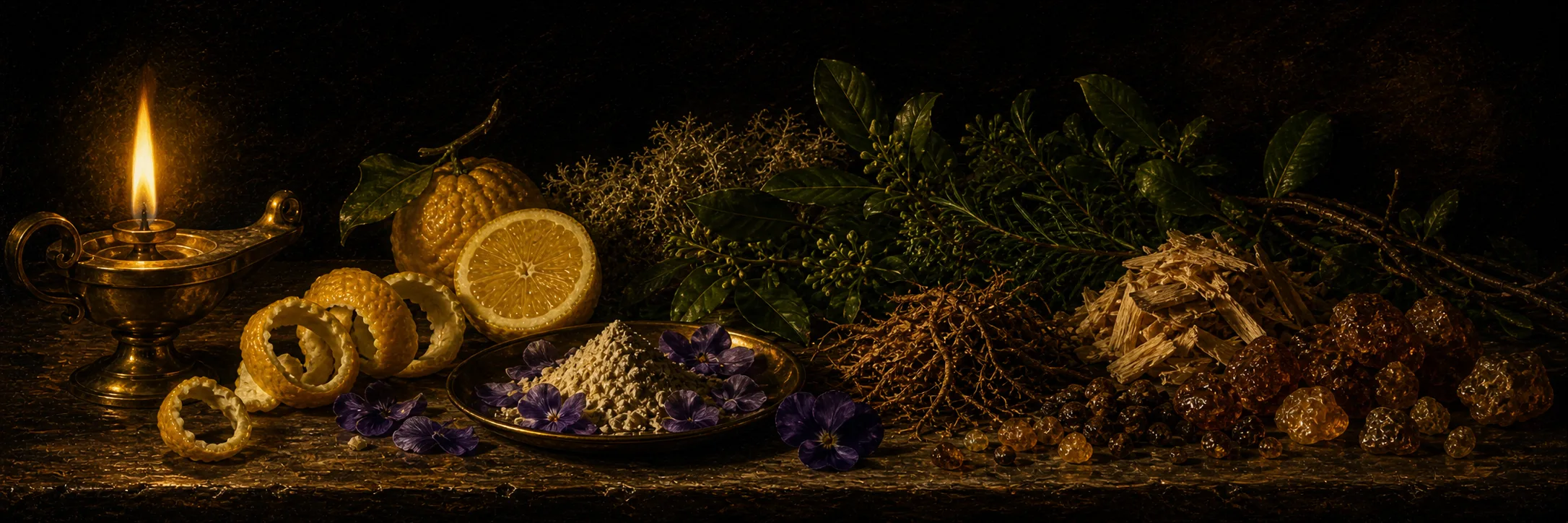
This is the 2016 Eau de Parfum re-interpretation of Chanel’s first masculine, composed by in-house perfumer Olivier Polge. It is NOT the original 1955 Henri Robert citrus-chypre EDT, nor the 1989 Jacques Polge Concentree - and wearers discussion constantly conflates the three. The EDP keeps the lemon-and-lavender skeleton of the family but pivots toward a smoother, warmer, vanilla-inflected woody chypre. In practice it functions as a refined, slightly powdery barbershop scent: bright citrus up top, an aromatic-spicy middle, and a creamy vanilla-vetiver drydown. It is the most “modern” and most divisive of the Pour Monsieur trio.
Scent Profile
The opening is a clean, realistic lemon lifted by lavender - bright but notably more subdued than the EDT’s effervescent citrus blast. Within the first ten to twenty minutes the citrus reads as polished rather than sparkling; reviewers consistently describe it as “smoother” and “rounder” than the EDT, with the lemon lingering longer (one reviewer notes it “remains around for an hour longer than the EDT”). The nutmeg arrives early as a gentle warm-spicy facet, giving the top a faint barbershop quality rather than a sharp aromatic bite. Through the heart (one to three hours) the composition shifts toward its defining character: a soft, powdery lavender-nutmeg accord laid over an emerging vanilla. This is the phase that splits opinion. Admirers find it “moody, smooth and rich,” a “constantly changing labyrinth”; detractors find the “creamy vanilla thing” eventually monotonous and “a little boring.” The listed lemon recedes to a supporting role; lavender and nutmeg dominate the mid. There is no oakmoss listed (the ingredient list confirms only a small oakmoss-extract presence), so the classic mossy chypre “bite” of the vintage is largely absent - this is a chypre by structure and warmth more than by a loud mossy backbone. The drydown (three hours plus) is where the EDP earns both its fans and its critics: a creamy, powdery vanilla-vetiver skin scent, frequently compared to talc, shaving cream, or “a haircut after being bathed in talc powder.” The vetiver is gentle and clean rather than earthy-green; vanilla is the through-line. Several experienced wearers triangulate the accord as sitting somewhere between Chanel Coromandel’s cocoa-sweetness, Musc Ravageur’s musk, and the lavender of Tom Ford Beau de Jour. The fragrance is mildly evolutive rather than dramatically linear. The signature accord is the powdery vanilla-lavender-vetiver “clean barbershop” drydown - the single most-cited descriptor in the wearers.
Performance
Projection is light-to-moderate: an arm’s-length scent bubble for roughly the first two hours, then a close, intimate presence. This is by design - even admirers call it “understated,” “discreet,” and “money talks, wealth whispers.” On skin, longevity reports cluster around six to eight hours; several wearers report disappointment (“doesn’t last as long as an EDP should,” “lasts just as long as a $30 cologne,” “weak on me”), while others get a full day with three-plus sprays. On clothing it lasts considerably longer and is the recommended strategy for those wanting more presence. Behavior is season-sensitive: one detailed review notes that in deep winter cold the longevity drops to “only a few hours” and you must apply more, while it performs best across spring, summer, and autumn. It is not a heat-projecting “headbanger.” Best application: spray generously, include a clothing spray, and expect a refined, close-wearing aura rather than a compliment-magnet cloud.
Wearing Context
This is a spring-through-autumn fragrance that shines in mild and warm-but-not-scorching weather and during daytime, office, and formal/business settings. Its restraint is its calling card: it reads as professional, tasteful, mature, and “classy” - ideal for interviews, the office, weddings, and any context where smelling expensive-but-quiet matters. It falls flat where projection and statement-making are wanted: clubs, loud social settings, or anyone seeking compliments-on-demand. The social-perception skew is decidedly “mature/sophisticated/older gentleman”; multiple reviewers warn it can read as “dated” or “old guy,” though several younger wearers (20s) insist the refinement keeps it relevant. It is unisex-friendly in feel despite the masculine billing - one reviewer arrived via No. 5 and Libre and found it a satisfying masculine-leaning floral-woody.
Comparisons & DNA
The essential comparison is internal: Chanel Pour Monsieur EDT (1955, Henri Robert) is brighter, sharper, more citrus-forward and chypre-classical, with the powdery-leather-mossy quality the EDP lacks; the EDT is also weaker in longevity. Chanel Pour Monsieur Concentree (1989, Jacques Polge) is sweeter, spicier and more orange-driven; many consider the EDP closest in spirit to the Concentree, with reduced lemon and added vanilla. Outside Chanel, the most-cited cousin is Dior Eau Sauvage / Eau Sauvage Parfum - a similar citrus-chypre lineage; wearers wearers say the Chanel EDP has “a smoother, more refined opening” while Dior offers 100ml bottles at a similar price to Chanel’s 75ml. Acqua di Parma Colonia is invoked for the elegant-citrus register but is cleaner and less spicy. Wearers also reference Chanel Antaeus (the EDP’s spicy opening “somewhat reminded me of Antaeus”) though Antaeus is far louder and more leathery-mossy. For the powdery-vanilla drydown, comparisons run to Chanel Coromandel (cocoa-sweet), Frederic Malle Musc Ravageur (musk), and Tom Ford Beau de Jour (lavender-barbershop). No true designer “clone” of the EDP exists. Lineage: it descends directly from the 1955 original - a foundational mid-century citrus-chypre masculine that, per Tania Sanchez and Luca Turin, helped define the “masculine chypre” archetype alongside Eau Sauvage.
Reception
Wearer response treats the EDP as the most polarizing of the three Pour Monsieurs. Praise centers on elegance, blending quality, the “smooth masterpiece” drydown, and its rarity as old-school perfumery in a modern release. Criticism is twofold: weak/inconsistent performance (a recurring complaint on both wearer discussions and Chanel’s own review pages), and the divisive vanilla drydown, which some find “boring” or a “rare misstep by Chanel.” On the EDT-vs-EDP axis, wearer response is genuinely split: EDT loyalists call the EDP’s vanilla “unsolicited and unnecessary spiciness… against the spirit of the smooth original,” while EDP fans find it “moody, smooth and rich.” Critical coverage of the 2016 EDP specifically is thin: the dedicated Luca Turin/Tania Sanchez and Persolaise reviews address the original 1955 EDT, not the 2016 flanker. Turin & Sanchez reviewed the original Pour Monsieur highly and tagged it a “masculine chypre”; that assessment does not transfer to the EDP. Blind buy? Reasonably safe for those who already like citrus-chypre/barbershop scents and value refinement over power - but sample first if you are sensitive to powdery vanilla drydowns or need strong projection.
Versions & Reformulation
Three distinct products share the “Pour Monsieur” name and are routinely confused. (1) Pour Monsieur EDT (1955, Henri Robert) - the original citrus-chypre, sold abroad in 50/100ml, no longer distributed in the US; it has undergone several IFRA-driven reformulations (notably loss of natural oakmoss). (2) Pour Monsieur Eau de Toilette Concentree (1989, Jacques Polge) - sweeter, spicier; in 75ml. (3) Pour Monsieur Eau de Parfum (2016, Olivier Polge) - this dossier’s subject, which functionally replaced the Concentree in some markets and is widely understood as Chanel’s response to IFRA limits on the older formula. In wear, the EDT is the brightest and shortest-lived; the Concentree sweeter and rounder; the EDP the warmest, most vanillic, and (per most) the longest-lasting of the three. The EDP itself is reported by long-term owners to have stayed consistent across batches (“My 2026 is just as lovely as my 2017”).
Acquisition Notes
Luxury-designer pricing tier (Chanel). The EDP is sold in 75ml (2.5 fl oz). It remains available on Chanel.com and at Chanel counters/Selfridges/Saks; the EDT is the harder-to-find version (discontinued in the US, still sold in Europe). Decant ecosystem is healthy - Scent Split, The Perfumed Court, and similar carry Pour Monsieur in its various concentrations.
Notable Facts & Lore
- Pour Monsieur (1955) was Chanel’s very first men’s fragrance, and wearer reports - repeated in wearer discussions and Chanel’s site - frames the 2016 EDP as Chanel’s way of preserving the line after IFRA regulations made the original oakmoss-heavy formula impossible to keep producing.
- One widely-shared comment frames it bluntly: “Because of the new regulations imposed by IFRA Chanel was unable to keep producing Pour Monsieur Concentree; that’s why the EDP version was created.”
- The name carries decades of branding history in North America, where the original was sold successively as “Eau de Cologne Pour Monsieur,” “A Gentleman’s Cologne,” “Chanel for Men,” and “Eau Pour Monsieur” before settling on “Pour Monsieur.”
- No documented statement from Olivier Polge specifically about the 2016 EDP’s intent surfaced in public materials, so the intent is inferred from the line’s preservation/reworking narrative.
- There is no viral TikTok moment of note, though at least one wearer reports discovering the EDP via a TikTok mini-review, a small signal of its quiet word-of-mouth life as a “hidden gem.”